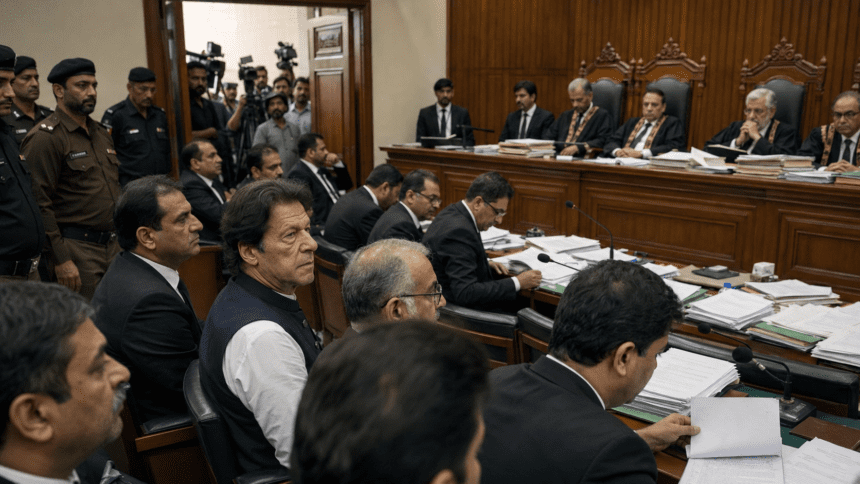
The Islamabad High Court has demanded a swift resolution to the £190 million corruption reference against the PTI founder, effectively putting the trial court on notice regarding persistent delays. A division bench, led by Justice Miangul Hassan Aurangzeb, made it clear that the ongoing stagnation in proceedings is no longer acceptable.
The bench expressed frustration during Wednesday’s hearing, pointing to the trial court’s failure to conclude the case despite repeated directives. Justice Aurangzeb questioned why the accountability court couldn’t expedite the process, noting that the judicial system’s credibility hinges on its ability to handle high-profile cases without becoming a tool for political or procedural deadlock.
Legal teams for the PTI founder have repeatedly argued that the trial is being fast-tracked unfairly, while the National Accountability Bureau (NAB) maintains that the defense is employing stalling tactics to prevent a verdict. The High Court, however, turned its focus toward the trial judge, emphasizing that the court’s primary responsibility is to manage the courtroom and ensure a decision is reached within a reasonable timeframe.
The £190 million case centers on allegations that the former prime minister and his associates adjusted a settlement from the UK’s National Crime Agency in a way that caused a massive loss to the national exchequer. The PTI founder has consistently denied the charges, labeling them a politically motivated attempt to sideline his party.
The court’s latest intervention signals a shift in how the judiciary intends to oversee the trial. By demanding a clear roadmap from the accountability court, the bench is signaling that it will no longer tolerate the “trial by attrition” that has defined the case for months.
The accountability judge is now expected to provide a concrete schedule for the remaining witnesses and arguments. Whether this directive leads to a verdict or simply adds another layer of procedural wrangling remains the central question hanging over the case. For now, the pressure is squarely on the trial court to prove it can deliver a ruling before the legal process loses all public confidence.