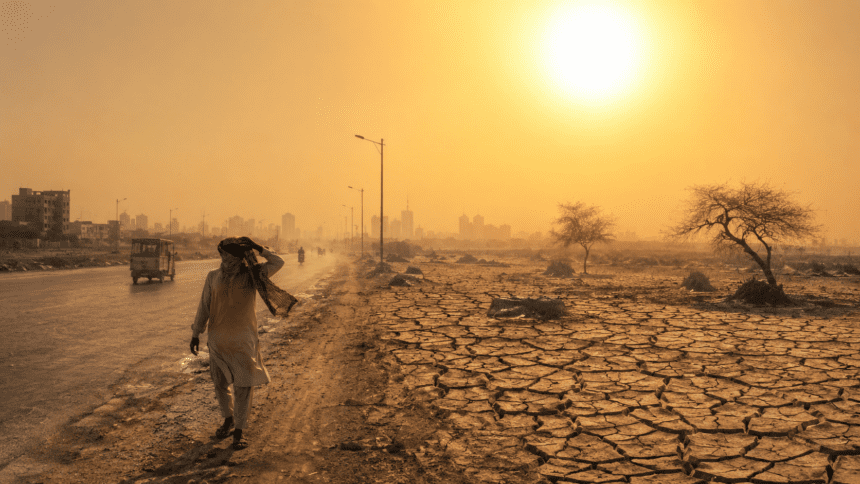
Karachi: Severe hot and dry weather continued to grip large parts of Sindh and Balochistan as the Pakistan Meteorological Department forecast mainly hot and dry conditions across most of the country, with very hot daytime weather likely in central and southern areas.
According to the latest forecast, most parts of Pakistan are expected to remain hot and dry, while southern and central regions are likely to experience very hot conditions during the day. Sindh and southern Balochistan remain among the areas facing the harshest weather, with temperatures rising sharply under dry atmospheric conditions.
In Sindh, hot to very hot and dry weather has been affecting several districts, particularly in central and upper parts of the province. Earlier heatwave alerts issued by provincial authorities warned that daytime temperatures could remain several degrees above normal in districts including Jamshoro, Dadu, Shaheed Benazirabad, Kashmore, Ghotki, Sanghar, Khairpur, Naushahro Feroze, Jacobabad, Larkana and Sukkur.
Karachi has also felt the pressure of the prolonged heat. The city’s temperature reportedly crossed 40°C multiple times in May and reached 44.1°C, its highest level since 2018. For residents already dealing with power outages, water shortages and humid conditions, even slightly lower temperatures can feel punishing.
Balochistan is also facing dry and very hot conditions, especially in its southern and plain areas. The Makran coast and other parts of the province were included in forecasts showing above-normal temperatures during May, while dry weather has increased pressure on water resources, agriculture and outdoor labour.
Health experts have advised citizens to avoid unnecessary exposure to direct sunlight, particularly during peak afternoon hours, and to drink plenty of water. Children, elderly people, daily-wage workers and people with heart or respiratory conditions remain at higher risk during such weather.
Farmers and livestock owners have also been urged to take precautions. Extreme dry heat can damage standing crops, reduce water availability and put animals under stress, especially in rural and desert areas where shade and drinking water are limited.
The current weather pattern is not unusual for late May, but its intensity is becoming harder to ignore. In Sindh and Balochistan, extreme heat is no longer just a seasonal discomfort. It is increasingly becoming a public-health, water-management and livelihood challenge.
Authorities have advised citizens to remain cautious, avoid unnecessary travel during the hottest hours of the day and follow official weather updates as hot and dry conditions are expected to persist.