Iraq have confirmed their final 26-man squad for the FIFA World Cup 2026, with head coach Graham Arnold keeping faith with the core group that dragged the Lions of Mesopotamia back to football’s biggest stage after four long decades away.
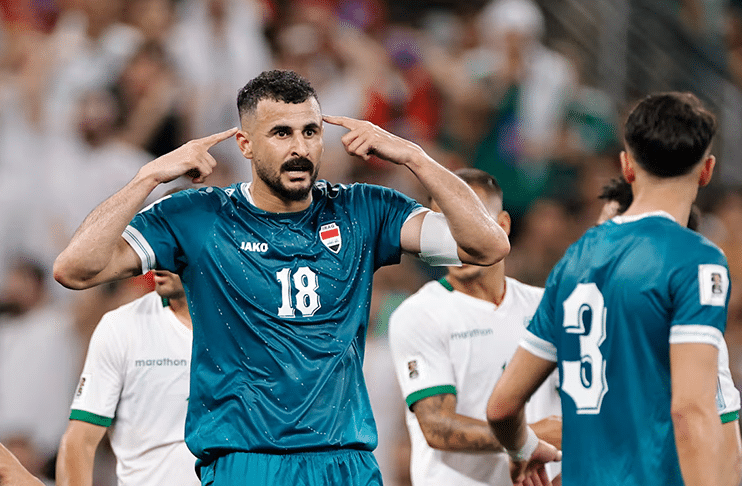
The headline name is no surprise. Veteran striker Aymen Hussein will lead Iraq’s attack in North America, carrying the hopes of a team and, frankly, a football-mad country that has waited since 1986 to see its flag at a World Cup again. Iraq sealed qualification in April by beating Bolivia 2-1 in the inter-confederation playoff in Mexico, with Ali Al-Hamadi and Hussein scoring the goals that made history.
Arnold’s squad is built around experience, continuity and a few interesting overseas-based options. Ali Al-Hamadi, the Ipswich Town forward, has been included alongside Hussein, while Ali Jassim, Mohanad Ali and Youssef Amyn give Iraq extra pace and variety in the final third. In midfield, former Manchester United academy player Zidane Iqbal, now with Utrecht, is part of the squad, as are Aimar Sher, Kevin Yakob, Amir Al-Ammari and Ahmed Qasem.
There is one notable omission. Dario Naamo, the Dundee United defender who recently switched international allegiance from Finland and made his Iraq debut in a 1-0 friendly win over Andorra, has been left out. Ahmed Qasem, another player who changed allegiance, has made the cut after his own recent debut.
Iraq’s captain and most experienced player, Jalal Hassan, has also been selected. The goalkeeper brings 100 caps and a steady presence to a squad that will need every bit of calm it can find in a tough group. Arnold has picked three goalkeepers — Fahad Talib, Jalal Hassan and Ahmed Basil — while Kamil Saadi will remain around the camp as injury cover.
The draw has not been kind. Iraq are in Group I with Norway, France and Senegal, three sides with very different styles and plenty of attacking threat. Their group-stage campaign begins against Norway in Boston, followed by France in Philadelphia and Senegal in Toronto.
For Arnold, who took charge of Iraq after his long association with Australian football, this squad says plenty about his thinking. He has not gambled wildly. He has stuck with players who got Iraq through the playoff pressure, while adding enough European-based talent to give the team balance and mobility.
And that might be Iraq’s best route at this World Cup: structure first, emotion second, and moments of quality from Hussein, Al-Hamadi, Iqbal or Jassim when the chance comes.