ISLAMABAD — The Pakistan Meteorological Department (PMD) has issued a nationwide severe heatwave alert effective from June 7 to 12. The atmospheric emergency is driven by a powerful high-pressure system hovering in the upper atmosphere, which is projected to force mercury levels significantly above historical seasonal averages across all provinces.
According to the official advisory released on Saturday, extreme thermal conditions will peak in parts of Sindh and Balochistan, where maximum temperatures are forecast to skyrocket to between 48°C and 51°C.
The Met Office has provided a regional breakdown of the anticipated tracking period:
-
Islamabad, Rawalpindi & Azad Jammu and Kashmir (June 8–10): Ambient temperatures will hover 5°C to 7°C above normal, peaking between 41°C and 44°C across Islamabad, Rawalpindi, Attock, Chakwal, Jhelum, Gujrat, Mirpur, Bhimber, Kotli, Bagh, and Muzaffarabad.
-
Punjab (June 8–11): A fierce heat spell will grip the province, pushing temperatures between 44°C and 48°C. Heavily impacted districts include Lahore, Faisalabad, Sargodha, Multan, Dera Ghazi Khan, Bahawalpur, Rahim Yar Khan, Sahiwal, and Mianwali, among others.
-
Sindh & Balochistan (June 7–12): Temperatures will surge 4°C to 6°C above average, reaching blistering highs of 48°C to 51°C in Sukkur, Larkana, Jacobabad, Dadu, Shaheed Benazirabad, Sibbi, Turbat, and Panjgur.
-
Karachi (June 8–12): The provincial capital will endure intensely hot and humid weather, with maximum temperatures sticking between 40°C and 43°C.
-
Khyber Pakhtunkhwa (June 8–11): Major plains including Peshawar, Mardan, Bannu, Karak, and Dera Ismail Khan will experience highs between 41°C and 46°C. Meanwhile, northern high-altitude zones like Chitral, Dir, Swat, and Gilgit-Baltistan will witness temperatures ranging from 37°C to 40°C between June 8 and 10.
Meteorologists noted that elevated nocturnal (nighttime) temperatures will fail to provide cooling relief, significantly compounding physical discomfort and systemic heat stress. Due to the intense thermal expansion, localized dust storms are also highly probable across isolated tracts of southern Punjab and Sindh.
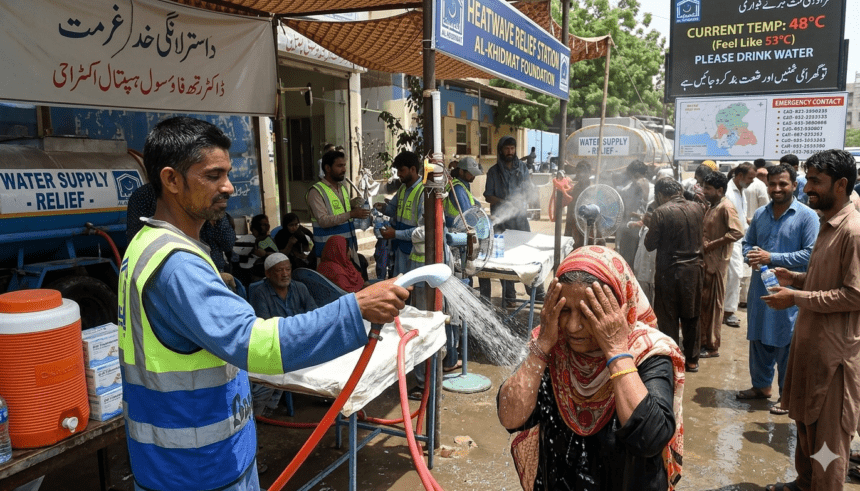
The PMD warned that the protracted heatwave carries hazardous implications for public health, safety, and daily municipal operations. The general public—with emphasis on highly vulnerable groups including children, women, and senior citizens—is strongly urged to take preventive measures. Citizens are advised to strictly avoid unnecessary exposure to direct sunlight between the peak hours of 10:00 AM and 4:00 PM, maintain rigorous hydration, and practice the judicious use of domestic water supplies.
The agricultural sector has been advised to adjust crop management schedules and implement immediate heat-mitigation protocols to shield livestock from heatstroke. Furthermore, grid operators anticipate a massive surge in national electricity consumption, prompting relevant civil authorities to remain on high alert to handle emergencies during the week-long heat spell.