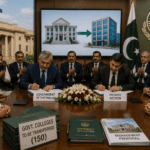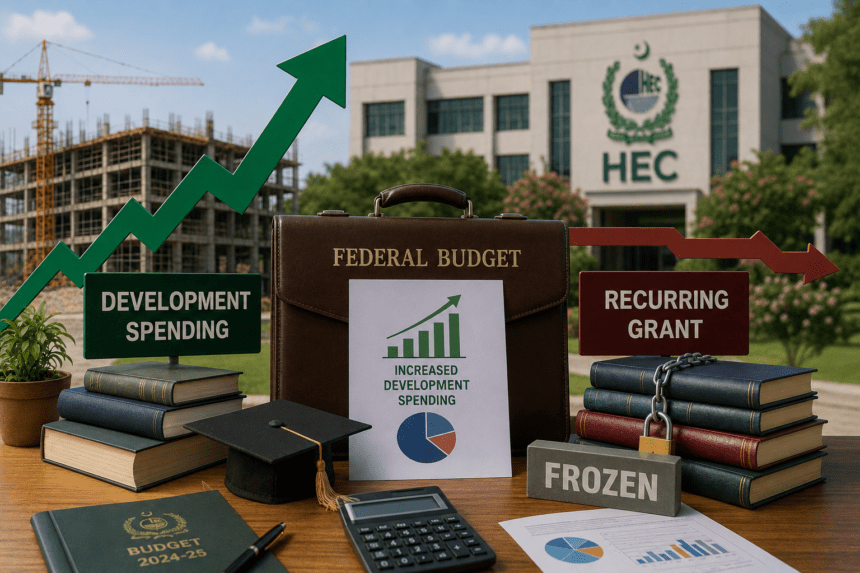
The federal government has increased development spending for the Higher Education Commission (HEC) in the 2026-27 budget, providing additional funds for ongoing and new higher education projects. However, the recurring grant allocated to public universities has remained largely unchanged, raising concerns among education stakeholders about the financial sustainability of higher education institutions.
According to HEC documents, the commission had requested at least Rs100 billion in recurring funding for public sector universities, citing rising operational costs, inflation, salary increases, and growing student enrollment. Despite these demands, the government maintained the recurring grant at around Rs65 billion, a figure that has remained largely stagnant for several years.
Education experts and university administrators argue that while increased development funding will help support infrastructure projects, research initiatives, and new academic programs, universities continue to face significant challenges in meeting day-to-day expenses such as salaries, pensions, utility bills, and academic operations. Many institutions have repeatedly warned of financial pressures due to insufficient recurring support.
The budget decision comes at a time when Pakistan is balancing fiscal constraints and IMF commitments while attempting to sustain investments in education and development. Although the higher development allocation is being viewed as a positive step for long-term growth, education stakeholders have urged the government to revisit recurring funding to prevent further financial strain on public universities.
University representatives and academic associations are expected to continue lobbying for enhanced recurring grants, arguing that adequate operational funding is essential to maintain educational quality, research output, and student services across the country’s higher education sector.