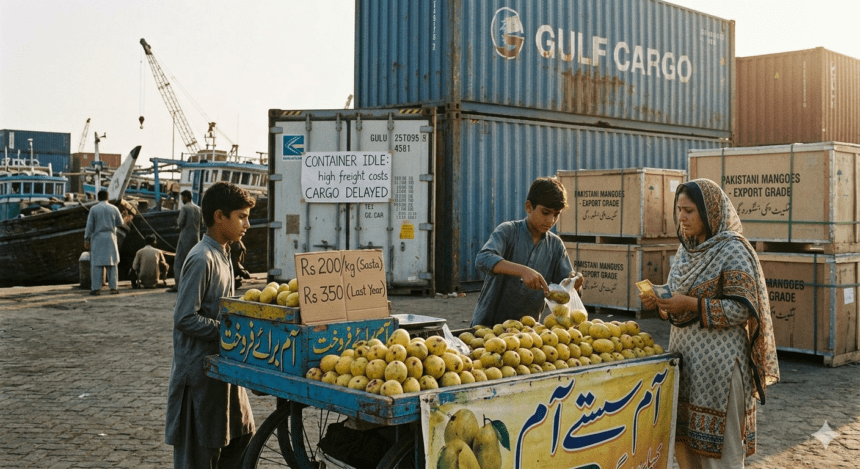
Karachi: Pakistan’s mango exports have witnessed a decline this season as the lingering effects of conflict and instability in the Middle East disrupt trade routes, increase freight costs, and create uncertainty in key export markets.
Industry representatives say that the Middle East remains one of the largest destinations for Pakistani mangoes, and recent regional tensions have affected shipping schedules, logistics operations, and market demand. Exporters are facing delays in cargo movement, while higher transportation costs have reduced profit margins.
According to exporters, the situation has become particularly challenging for fresh fruit shipments, where timely delivery is crucial to maintaining quality and market value. Some traders have reported difficulties in securing cargo space, while others have had to explore alternative routes to ensure shipments reach international buyers.
Agricultural experts warn that reduced exports could affect earnings for growers, exporters, and the broader agriculture sector. Pakistan is among the world’s leading mango-producing countries, and the fruit contributes significantly to agricultural export revenues during the summer season.
Despite the challenges, exporters remain hopeful that improving regional stability and smoother logistics operations in the coming months will help restore export volumes. They have also urged authorities to support the sector through improved trade facilitation and freight solutions.
Analysts believe that diversifying export destinations and strengthening cold-chain infrastructure could help reduce the industry’s dependence on a limited number of markets and make mango exports more resilient to geopolitical disruptions.