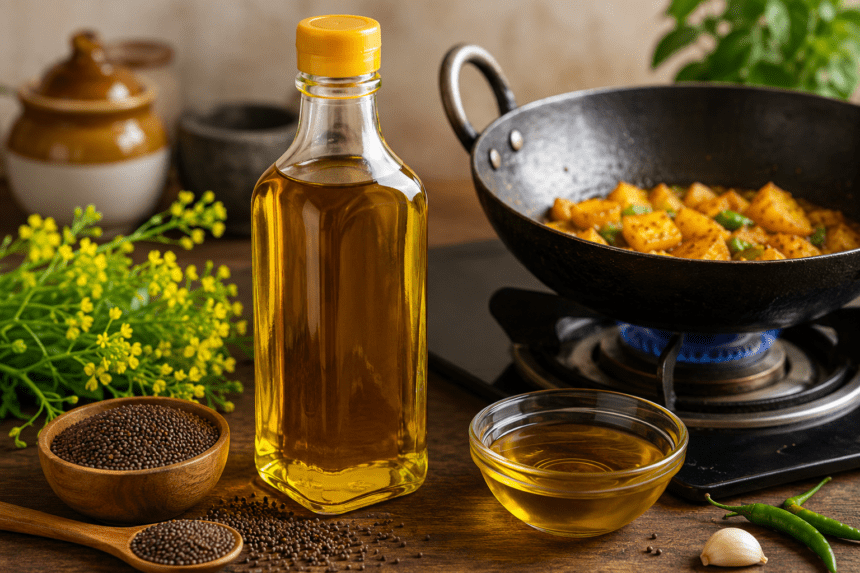
Mustard oil (sarson ka tel) is widely used in cooking, especially in South Asian cuisine. It has a strong flavor and is often used for frying, sautéing, and traditional dishes. While it offers some health benefits, its effects depend on the quantity and quality used.
Supports Heart Health (In Moderation)
Mustard oil contains healthy fats like MUFA and PUFA, which may support heart health when used in limited amounts. These fats can help maintain cholesterol balance.
Improves Digestion
In small amounts, mustard oil may help stimulate digestion and improve appetite. It is traditionally used in home cooking for this reason.
Natural Antibacterial Properties
Mustard oil has natural antibacterial and antifungal properties, which may help protect against certain microbes when included in food.
High in Calories
Like all oils, mustard oil is calorie-dense. Excess use can lead to weight gain if not balanced with physical activity.
Erucic Acid Concern
Some types of mustard oil contain erucic acid. High intake over a long period may be harmful, which is why regulated and food-grade oil is important.
May Cause Stomach Irritation
In some people, especially when used in excess, mustard oil may cause acidity or digestive discomfort.
Quality Matters
Adulterated or low-quality mustard oil can be harmful. Always choose properly refined and food-grade oil for cooking.
Final Thoughts
Mustard oil can be part of a healthy diet when used in moderation. The key is balance—small amounts in cooking are generally safe, but excessive use should be avoided. A mix of different healthy oils is often the best approach for overall health.