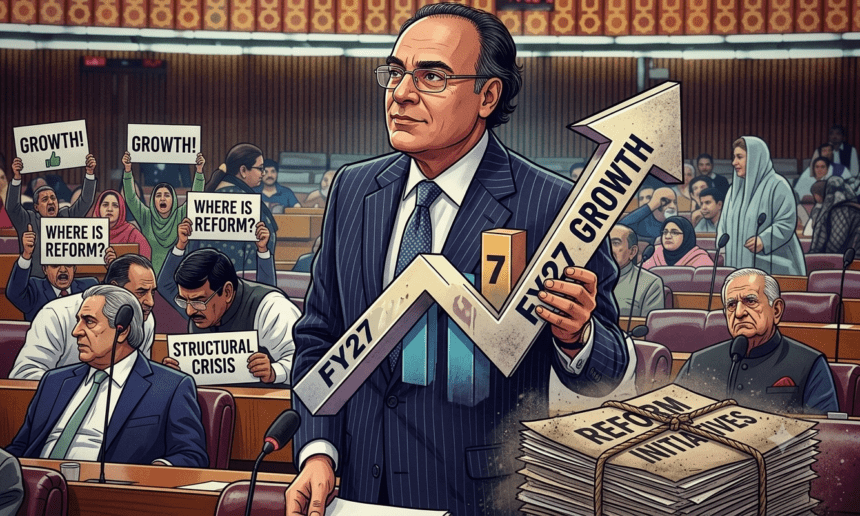
ISLAMABAD: The federal budget for FY2026-27 has been widely viewed as an effort to stimulate economic growth through increased development spending, investment incentives, and business-friendly measures. However, economic analysts argue that while the budget focuses on short-term growth, it once again falls short of introducing the deep structural reforms needed for long-term economic stability.
The government has allocated significant resources for infrastructure projects, social welfare programs, and public sector development while introducing measures aimed at boosting industrial activity and encouraging investment. Officials maintain that the budget is designed to strengthen economic recovery, create employment opportunities, and improve overall business confidence.
Despite these initiatives, economists believe the budget lacks comprehensive reforms in key areas such as tax administration, public sector enterprises, energy pricing, pension liabilities, and governance. They argue that without addressing these long-standing structural challenges, sustainable economic growth may remain difficult to achieve.
Experts also point out that Pakistan continues to face issues including a narrow tax base, low tax compliance, circular debt in the energy sector, and inefficient public spending. They stress that meaningful reforms in these sectors are essential to reduce fiscal deficits, improve productivity, and strengthen investor confidence.
While the budget includes several relief measures and development initiatives, analysts say durable economic progress will depend not only on higher spending but also on implementing institutional and policy reforms that improve transparency, efficiency, and fiscal discipline.
The FY2026-27 budget has therefore reignited debate over whether Pakistan’s economic strategy should focus primarily on short-term growth or place greater emphasis on long-term structural reforms to ensure lasting financial stability.