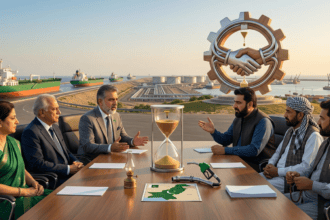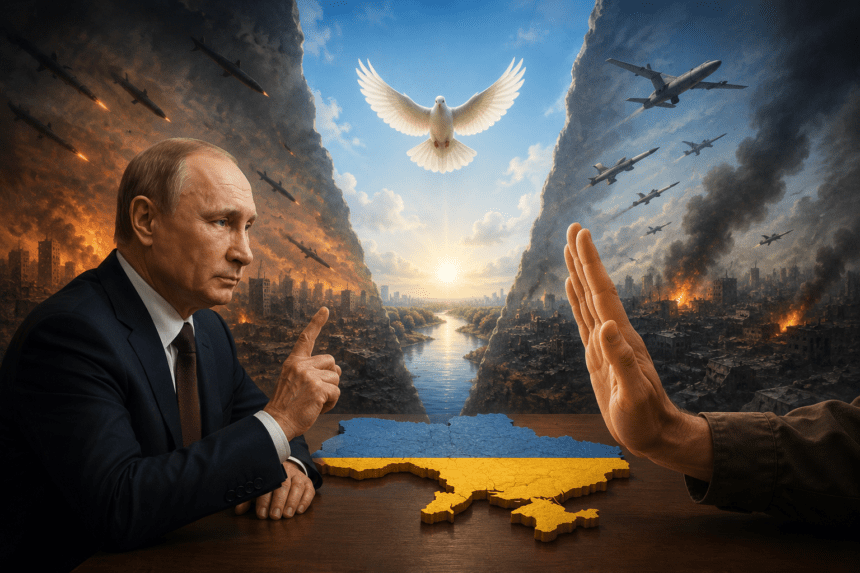
Russian President Vladimir Putin suggested Thursday that Ukraine recently proposed a mutual halt to long-range strikes on energy infrastructure. He told reporters at the BRICS summit in Kazan that Turkey relayed the proposal, though he claimed Kyiv abandoned the idea almost immediately.
“The Ukrainian side actually answered through Turkey,” Putin said. “But the very next day, the leader of the Kyiv regime came out and said, ‘No, we are not going to agree to this.'”
The Kremlin leader’s comments come as the front line in eastern Ukraine remains locked in a grinding war of attrition. Both sides have spent months using long-range drones to pummel the other’s power grids, oil refineries, and logistics hubs.
For Ukraine, these deep strikes are a primary tactical lever. President Volodymyr Zelenskyy has repeatedly argued that Russia’s ability to wage war relies on its industrial base and energy revenue; targeting these facilities is, in his view, a necessary response to Russian aggression.
Putin’s public disclosure of this back-channel communication appears aimed at casting Kyiv as the party unwilling to de-escalate. By pointing to Turkey as the intermediary, he frames Russia as open to “reasonable” negotiations, provided they align with his strategic objectives.
Western intelligence agencies have long noted that Moscow frequently uses such disclosures to manipulate public sentiment and drive wedges between Ukraine and its international backers. Whether a formal offer was ever truly on the table remains unverifiable, but the timing is pointed. It arrives just as the BRICS summit concludes, a venue Putin has used to project strength and project a world order not dictated by Washington.
Zelenskyy has not publicly confirmed the specific proposal Putin described. Instead, he continues to push for the “Victory Plan” he presented to Western allies earlier this month—a strategy that centers on increased military support and long-range strike capabilities, rather than a freeze on existing tactics.
The reality on the ground remains unchanged. With winter approaching, the energy grid is once again the primary theater of the conflict. Both nations are currently prioritizing the preservation of their own assets while betting that the other will collapse first under the pressure of a cold, dark season.
There is no sign of a ceasefire. The rhetoric from both Moscow and Kyiv suggests that for now, the drones will keep flying.