QUETTA — Prime Minister Shehbaz Sharif arrived in Quetta on Wednesday, ordering a decisive shift in security policy as a wave of militant attacks continues to destabilize the province.
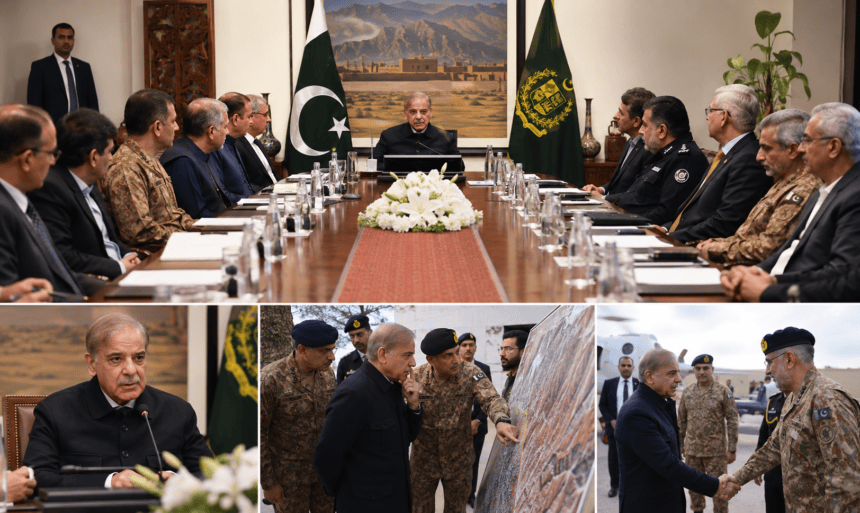
The Prime Minister held a high-level session at the Governor House, flanked by Chief of Army Staff General Asim Munir, provincial leadership, and top intelligence officials. The meeting focused on the recent spike in violence targeting both security outposts and civilian infrastructure, which has left the province on edge.
Sharif made it clear that the state’s patience for militant activity has hit a limit. He directed security forces to enhance intelligence-based operations, specifically targeting the sleeper cells responsible for recent strikes.
“The state will not tolerate these disruptions,” the Prime Minister told officials, according to sources familiar with the meeting. “Those challenging the writ of the state will face a unified, uncompromising response.”
The security situation in Balochistan has deteriorated sharply over the past month. Attacks on rail lines, police stations, and highway convoys have paralyzed key transport routes and sparked fears of a broader insurgency. The military leadership briefed the Prime Minister on the tactical challenges posed by these groups, emphasizing the need for better coordination between provincial police and federal intelligence agencies.
While the government continues to push for regional stability, local stakeholders remain skeptical. Tribal elders and civil society members have long argued that security-heavy approaches often fail to address the underlying economic grievances that fuel local unrest.
The Chief of Army Staff emphasized that the military remains committed to providing the necessary backing to the provincial government, but the efficacy of this strategy depends on the intelligence-sharing mechanisms being overhauled immediately.
As the meeting concluded, the Prime Minister announced a package for the families of those killed in recent attacks — a symbolic gesture that does little to mask the growing reality on the ground. Whether this latest directive translates into lasting stability or merely another cycle of temporary crackdowns remains the central concern for the people of Balochistan.