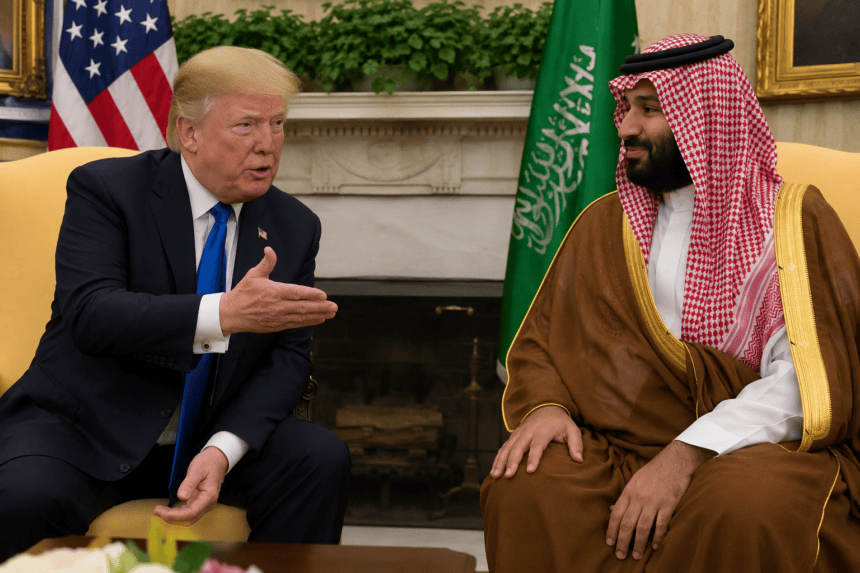
Donald Trump has signaled a transactional approach to Middle East security, insisting that any U.S.-backed nuclear program for Saudi Arabia must be tethered to the kingdom’s formal recognition of Israel.
The former president, eyeing a return to the White House, framed the potential deal as a high-stakes trade-off. He argued that the regional integration of Israel is a prerequisite for the kind of advanced technological cooperation Riyadh has been seeking from Washington for years.
“It’s a big deal,” Trump said in recent comments, emphasizing that the normalization of diplomatic ties isn’t just a political preference but a foundational requirement. He suggests that without this strategic realignment, the risks of nuclear proliferation in the region outweigh the benefits of empowering Saudi energy infrastructure.
The Saudi leadership has long maintained that a path to Palestinian statehood—or at least significant concessions—remains a core demand before they can move toward full recognition of Israel. Trump’s stance appears to bypass those traditional diplomatic hurdles, prioritizing the Abraham Accords framework over the long-standing Arab Peace Initiative.
For the Biden administration, which has spent months brokering a complex security pact involving Israel and Saudi Arabia, Trump’s rhetoric complicates an already fragile negotiation. White House officials have repeatedly stated that a nuclear deal must include strict non-proliferation safeguards, yet they have faced internal pushback from lawmakers concerned about the security implications of a nuclear-armed Saudi Arabia.
Trump’s intervention turns the Saudi-Israel question into a central campaign issue, contrasting his “deal-maker” approach with the current administration’s more cautious, multilateral efforts.
The math for Riyadh is becoming increasingly difficult. Crown Prince Mohammed bin Salman faces the challenge of balancing domestic aspirations for a modern, nuclear-powered economy against the geopolitical realities of a region where public sentiment remains deeply skeptical of Israel.
Whether this ultimatum serves as a genuine policy roadmap or merely a campaign-trail provocation remains the primary question for regional observers. For now, the prospect of a nuclear-capable Saudi Arabia sits firmly in the middle of a shifting American political landscape, with its future tied to a diplomatic recognition that has proven elusive for decades.