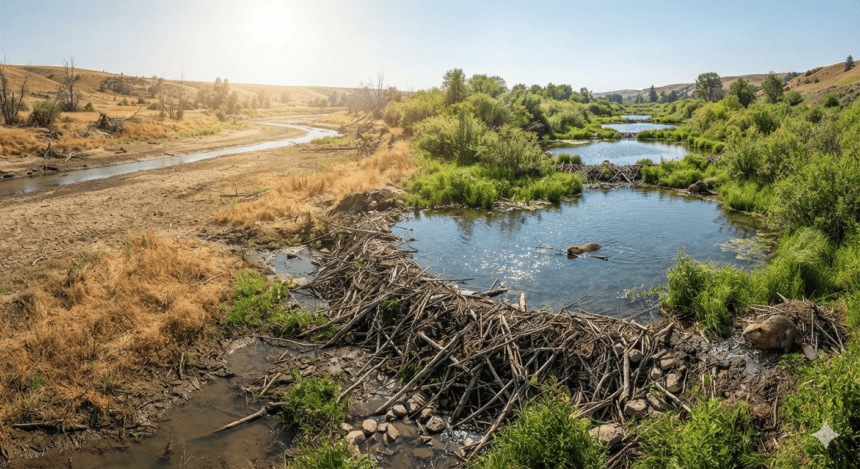
Beaver dams are doing what multi-million dollar engineering projects often fail to achieve: they are keeping landscapes wet.
New field observations across the American West show that areas occupied by beavers maintain higher soil moisture and greener vegetation during peak heat. While climate change accelerates evaporation and shrinks snowpacks, these ecosystem engineers are effectively building natural reservoirs that hold water in the ground long after the spring runoff ends.
Ecologists have long suspected the benefits of beaver activity, but recent data confirms the scale of the impact. Landscapes with active colonies show a 10% to 20% increase in water retention compared to neighboring, dam-free streams. During severe dry spells, the difference is stark—beaver-influenced meadows often remain lush, acting as firebreaks that stop encroaching wildfires in their tracks.
“It’s not just about the water behind the dam,” said Dr. Elena Rossi, a hydrologist specializing in riparian restoration. “It’s about the entire valley floor. The dams slow the water down, forcing it to seep into the aquifer. That water doesn’t just vanish; it migrates underground, feeding the surrounding plant life for months.”
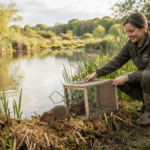
The shift in perspective toward these animals is significant. For decades, land managers viewed beavers as pests that flooded roads and plugged irrigation ditches. Now, agencies from the Bureau of Land Management to local conservation districts are actively relocating nuisance beavers to drought-stricken watersheds. They’re even installing “beaver dam analogs”—man-made structures designed to mimic the animals’ work and encourage them to move in and finish the job.
Critics point out that these structures can still cause localized flooding on private property, leading to friction with farmers and ranchers. However, the cost of managing that conflict is increasingly viewed as a bargain compared to the long-term expense of fighting perpetual water scarcity.
As traditional water infrastructure struggles to keep pace with a warming climate, the solution may be as simple as letting a rodent do the heavy lifting. The strategy won’t end the drought, but it’s proving to be the most effective way to live with it.