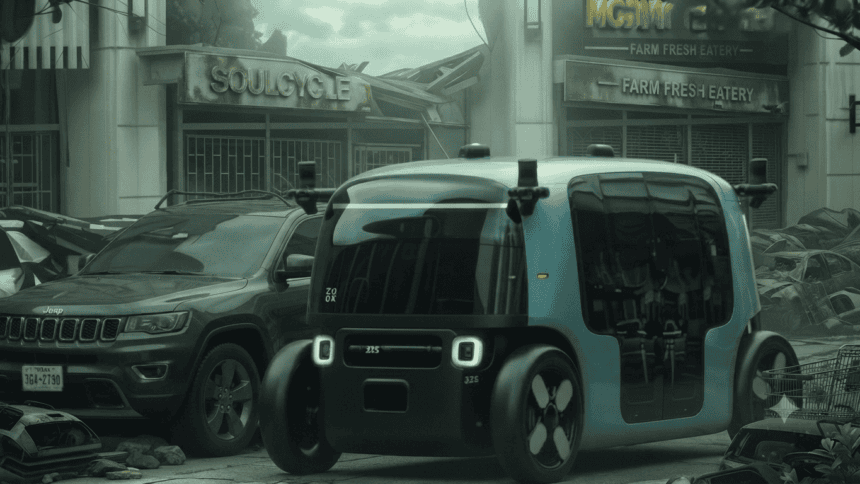
LAS VEGAS: Amazon-backed autonomous vehicle company Zoox has announced that it will begin offering paid robotaxi rides in Las Vegas starting next week, following a recent federal regulatory greenlight for the commercial deployment of its driverless vehicles.
Zoox, whose distinctive electric carriage-style vehicle features two rows of inward-facing seats, has previously been transporting passengers for free across cities like Las Vegas, San Francisco, Austin, and Miami as part of its testing phase. The commercial rollout intensifies competition in the growing U.S. autonomous ride-hailing market, where rivals such as Alphabet’s Waymo operate paid services across multiple cities and Tesla has commenced its own rollout.
Beginning Monday, Zoox will introduce fares comparable to the “comfort” tier offered by traditional ride-hailing services—typically featuring roomier vehicles at rates 20% to 40% higher than standard options. The company has not yet disclosed a timeline for launching paid operations in other cities.
The launch follows a major milestone for Zoox, which became the first autonomous ride-hailing company to secure an exemption from the National Highway Traffic Safety Administration (NHTSA) regarding federal rules requiring human controls. This clearance applies specifically to vehicles built from the ground up as robotaxis rather than modified conventional cars, though the exemption is capped at up to 2,500 vehicles annually for the next two years.
NHTSA concluded that Zoox’s vehicles meet safety equivalents required under federal standards, though it has imposed strict reporting requirements concerning incidents such as unexpected stops or collisions. Zoox confirmed that its pricing structure will rely on a base fare combined with time and distance metrics calculated via optimal routing, ensuring passengers are not charged extra if the vehicle takes a longer path.
Despite the commercial expansion, autonomous vehicle operators continue to face close regulatory and public scrutiny regarding safety protocols, particularly concerning interactions with emergency personnel and complex traffic scenarios. Zoox has issued several software recalls over the past two years, including a recent recall in July after one of its vehicles encountered difficulties detecting heavy smoke at an emergency scene.