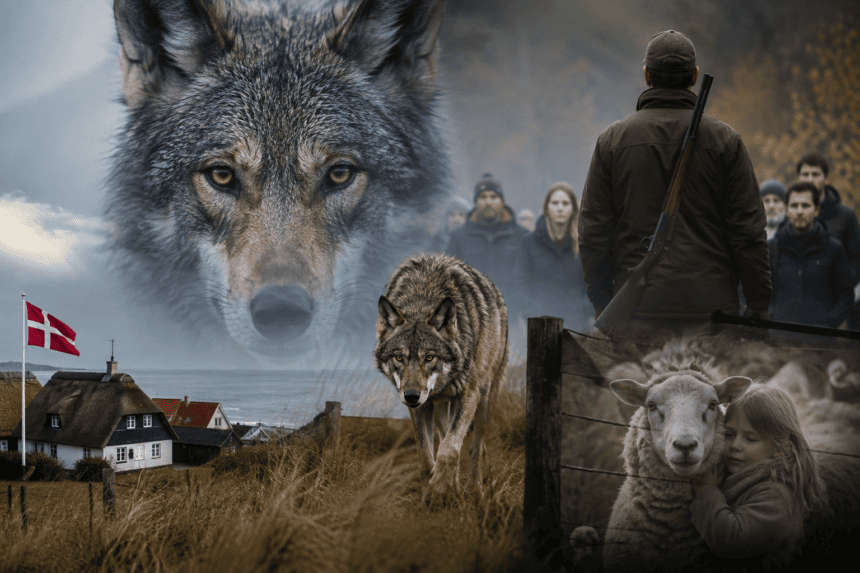
The gray wolf was once extinct in Denmark, wiped out by hunting and habitat loss by the early 19th century. When a lone male crossed the border from Germany in 2012, it was hailed as a biological milestone. Twelve years later, that success story has morphed into a complex political and social headache.
For conservationists, the wolf’s return represents a restored ecosystem. For rural residents in Jutland, it’s a direct threat to livestock and personal security.
The tipping point came when a wolf began showing unusually bold behavior, approaching human settlements and ignoring standard deterrents. This wasn’t just a sighting; it was a shift in animal-human proximity that forced Danish authorities to rethink their “hands-off” protection policies.
“People aren’t just worried about their sheep anymore,” says local farmer Jens Nielsen. “They’re worried about their children playing in the yard. When an animal loses its natural fear of humans, the rules of the game change.”
The Danish government currently operates under strict European Union protections for the species. Under the EU’s Habitats Directive, lethal control is a last resort, permitted only when other measures fail and the animal poses a genuine, sustained threat.
But public pressure is mounting. Local advocacy groups are calling for “wolf-free zones,” arguing that Denmark’s high population density and small, fragmented forests make it impossible to coexist with apex predators. The Ministry of Environment has responded by increasing funding for predator-proof fencing, yet many farmers claim the compensation process for killed livestock is bureaucratic and slow.
Wildlife biologists warn against knee-jerk reactions. They point to the wolf’s role in managing deer populations, which have surged in recent years, causing significant agricultural damage. Removing the wolf, they argue, would simply trade one problem for another.
The reality is that Denmark has become a laboratory for European conservation. If a country with such limited wilderness can’t manage a handful of wolves, the prospects for rewilding initiatives across the continent look grim.
For now, the wolf remains—a protected symbol of nature’s return that few residents are actually comfortable living beside. As the government navigates the tension between international law and local outcry, one thing is certain: the era of the wolf in Denmark is no longer a distant academic debate. It’s a domestic crisis.