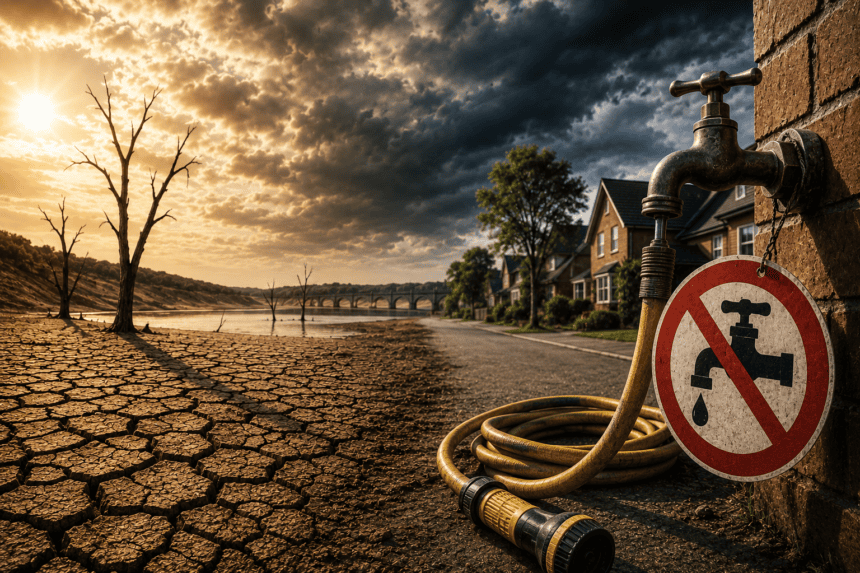
Water companies have tightened the taps today, imposing mandatory hosepipe bans across several regions as the government officially declared a drought. The restrictions, affecting millions of households, follow the driest summer in decades and a sustained heatwave that has pushed reservoirs to critical lows.
The bans prohibit using hosepipes for watering gardens, cleaning cars, or filling swimming pools. For many residents, the change is immediate. Those caught violating the rules face potential fines of up to £1,000, though utility providers say they prefer public cooperation over legal action.
Utility providers insist these measures are vital to protect essential supplies. Demand for water has spiked as temperatures climbed, leaving infrastructure struggling to keep pace. “We’ve done everything we can to maintain pressure, but the reservoirs are at levels we haven’t seen since the drought of ’76,” one water company executive told reporters this morning.
Critics, however, point to aging infrastructure as the real culprit. National data suggests that nearly a billion liters of water are lost to leaks every single day. While households are now being asked to cut back, some consumer advocacy groups argue that the burden is being unfairly placed on residents rather than on companies failing to fix their own pipes.
The drought declaration triggers a shift in government priorities, allowing authorities to fast-track emergency measures. This includes potential restrictions on commercial non-essential water use, such as golf courses and ornamental fountains. Environmental agencies are also monitoring river levels closely, warning that aquatic life faces a “catastrophic” threat if the dry spell continues into the autumn.
For now, the focus remains on the meter. If you aren’t sure if your street is affected, check your water provider’s website. They’ve updated their maps as of 6:00 a.m. today, and the list of restricted postcodes is growing.
The weather forecast offers no immediate relief. With no significant rainfall expected for at least another ten days, these bans are likely to remain in place until the ground is sufficiently saturated to replenish the depleted water tables.