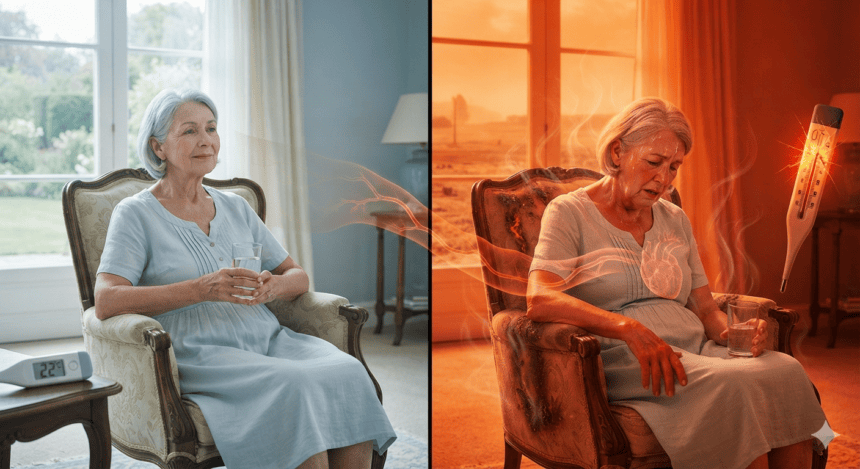
For years, heat-related health warnings focused on dehydration and heatstroke—the obvious, acute dangers of a summer scorcher. But new clinical data suggests the threat to the elderly is far more insidious. It isn’t just about drinking water; it’s about a fundamental failure of the aging body to manage internal temperature regulation and the cascading effects on chronic conditions.
Medical researchers are finding that the “dangerous heat” threshold for those over 65 is significantly lower than previously assumed. While a healthy 30-year-old can shed heat through sweat and peripheral blood flow, an 80-year-old’s cardiovascular system often lacks the flexibility to keep pace. When the mercury climbs, their heart rate doesn’t just increase; it struggles to maintain the output required to cool the skin while simultaneously fueling vital organs.
The problem starts with the skin. Aging reduces the density of sweat glands and decreases the efficiency of the body’s cooling mechanism. This creates a “thermal trap.” Core temperatures rise faster and stay high longer, putting immense strain on the kidneys and the heart.
“We used to look at heat as a direct cause of death—like heatstroke,” says Dr. Elena Rossi, a geriatric specialist. “Now, we’re realizing it’s an accelerant. It takes a patient with controlled hypertension or mild kidney disease and pushes them into an acute crisis in a matter of hours.”
The data is sobering. Hospital admissions for heart failure, respiratory distress, and stroke spike within 24 hours of a temperature surge. These aren’t necessarily people collapsing in the sun; they are individuals sitting in poorly ventilated homes, experiencing a slow, systemic shutdown that their caregivers often mistake for simple fatigue or the “flu.”
Modern urban design exacerbates the risk. Many elderly residents live in older, multi-story buildings that retain heat long after the sun goes down. Once a building’s thermal mass warms up, it acts like a heater through the night, preventing the body from recovering during the cooler evening hours. Without that overnight relief, the cumulative stress on the organs becomes unsustainable.
Public health policy has been slow to pivot. Most heat-action plans are built around the needs of the general population, relying on public cooling centers that require mobility and transportation—two things many seniors lack.
The reality is that for the elderly, heat isn’t just an inconvenience or a seasonal discomfort. It is a physiological deadline. As global temperatures continue to climb, the standard advice to “stay hydrated” is no longer enough. The challenge is now identifying the vulnerable before the temperature spikes, rather than waiting for the ambulances to arrive when the heat becomes inescapable.