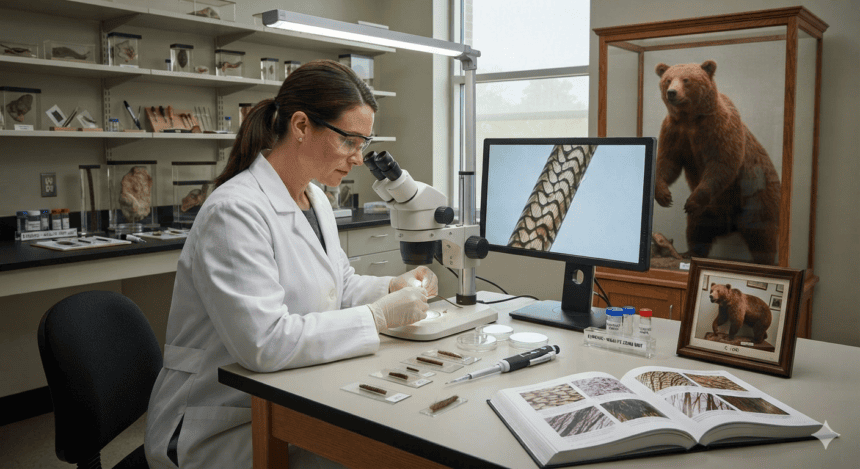
A single hair from a 150-year-old taxidermy bear is now the primary tool for identifying how modern poaching syndicates move illegal wildlife products across borders.
Researchers at the University of Copenhagen have successfully sequenced DNA from museum specimens to create a genetic map of brown bear populations. By comparing this historical data against DNA found in seized bear bile and paws from black-market raids, authorities can now pinpoint exactly where a poached animal originated.
The technique bypasses the guesswork that once crippled wildlife investigations. Previously, seized products were often incinerated or stored in warehouses, their origins lost to the black market’s opaque supply chain. Now, forensic teams can match a sample—even one degraded by heat or chemical preservatives—to a specific geographic region.
“We are essentially using the past to police the present,” said Dr. Elena Rossi, a lead geneticist on the study. “If we can trace a claw back to a specific mountain range in the Balkans, we know exactly where the enforcement gaps are.”
The implications for international law enforcement are significant. Interpol reports that illegal wildlife trade remains a multi-billion dollar industry, often linked to organized crime groups that use the same routes for narcotics and human trafficking. By narrowing down the origin of a product, investigators can move away from chasing individual poachers and start dismantling the distribution networks that move goods from forest to market.
Critics of the trade have long argued that current anti-poaching measures are too reactive. This forensic breakthrough forces a shift in strategy. Instead of patrolling vast, unreachable wilderness areas, wildlife agencies can now concentrate their limited resources on the specific transit hubs and poaching hotspots identified by genetic matching.
The museum specimens serve as a baseline. By analyzing the genetic diversity of bears from the 19th century, scientists have established what “healthy” populations looked like before the industrial-scale poaching of the last few decades. This data allows them to track not just where the animals were taken, but how much the population has been decimated over the last century.
As these DNA databases grow, the margin for error for traffickers shrinks. A product is no longer just a piece of contraband; it is now a digital footprint that leads straight back to the source.