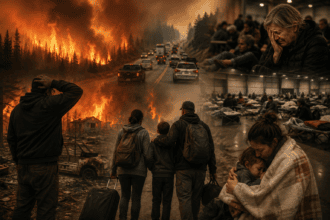
NASA data has revealed a sharp and unsettling surge in the intensity, frequency, and duration of extreme weather events like floods and droughts over the past five years a trend scientists say is accelerating faster than expected.
According to the latest figures from NASA’s GRACE satellite, the number of extreme weather events recorded last year was nearly double the average from 2003 to 2020. Researchers say the data suggests a growing link between rising global temperatures and increasingly destructive droughts and floods.
While the data is not yet peer-reviewed, scientists stress that the early findings are both surprising and alarming. Dr. Bailing Li of NASA’s Goddard Space Flight Center, who co-led the analysis, stated that while causation isn’t yet confirmed, the global warming trend is the most likely driver. “It’s difficult to pinpoint exactly what’s happening here, but other events suggest warming is behind it. We’re certainly alarmed,” she said.
Dr. Matthew Rodell, chief of hydrologic sciences at NASA, echoed the concern, warning that although more data is needed to declare a definitive trend, the rapid escalation is “certainly scary.”
Experts from the UK Met Office and University of Exeter say these findings are a stark reminder that long-predicted increases in extreme events are no longer theoretical. “The world isn’t prepared for these changes,” said Professor Richard Betts. “Our infrastructure and societies are built around the climate of the past, not the intensifying extremes we now face.”
The data update, requested by the Oxford-based Global Water Intelligence, used a formula measuring the severity of an event by its size, duration, and intensity of wet or dry conditions. It suggests a stronger correlation with rising global mean temperatures than with natural phenomena like El Niño, indicating that continued warming will likely bring even more extreme weather.
Christopher Gasson of Global Water Intelligence warned that water utilities worldwide are dangerously unprepared for what he called a “double threat” of too much or too little water. “This is extremely scary,” he said. “The industry needs urgent and massive investment.”
Supporting NASA’s findings, the Royal Meteorological Society noted that sudden swings between droughts and floods dubbed “hydroclimatic whiplash” are becoming more common and more damaging. These abrupt transitions are harming agriculture, infrastructure, biodiversity, and public health more than single isolated events.
A WaterAid report further underscored this danger, showing that extreme shifts between hot and cold, or dry and wet, are impacting millions globally, particularly in major cities.
Meanwhile, the World Meteorological Organization warns there is an 80% chance that one of the next five years will surpass 2024 as the hottest year on record. Rising global temperatures are projected to continue, exacerbating risks to economies, societies, and development.
The growing unpredictability of these extremes is also raising alarms in the insurance sector, which relies heavily on historical trends to set premiums potentially destabilizing markets already grappling with climate risks.
Asher Minns of the Tyndall Centre for Climate Change Research summarized the urgency: “We are seeing the consequences of climate inaction playing out in real time. Our systems must adapt quickly or face compounding crises.”