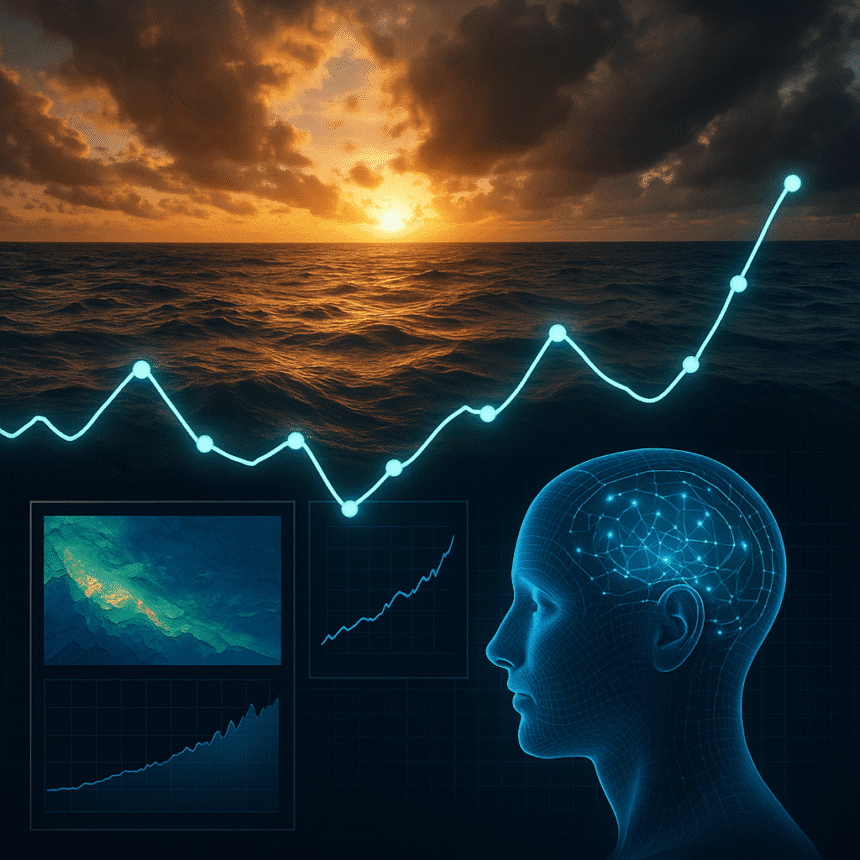
In a groundbreaking revelation, artificial intelligence systems have detected a significant and accelerating rise in deep sea levels, pointing to more severe climate consequences than previously estimated.
According to recent data analyzed by AI-driven oceanographic models at the Global Climate Observatory, deep ocean levels particularly in the Pacific and Indian Oceans have risen by over 3.4 millimeters annually, a rate that has doubled in the past decade.
AI-Powered Insights
New deep-sea sensing networks equipped with AI tools have provided real-time data from below 2,000 meters depths previously hard to monitor. The AI systems are trained to recognize subtle changes in temperature, pressure, and salinity that indicate the expansion of water due to warming also known as thermal expansion, a key driver of sea level rise.
“Traditional satellite data only scratched the surface. With AI, we are now seeing the hidden rise from the ocean’s deepest layers,” said Dr. Elena Marris, a lead climate scientist at the International Ocean Data Initiative.
Weather Patterns Under Stress
The findings coincide with record-breaking El Niño events, stronger-than-normal cyclonic activities in the South Pacific, and increased glacial melt from Antarctica, all contributing to unpredictable weather patterns.
Experts warn that these changes are disrupting marine ecosystems, increasing coastal flooding, and threatening small island nations.
Global Response Needed
The United Nations Framework on Climate Change (UNFCCC) has urged for faster adoption of climate adaptation technologies. A new task force involving AI developers, oceanographers, and climate policymakers is set to convene next month in Geneva to address the findings.
“AI is no longer just a tool for analysis it’s becoming a key actor in climate forecasting and marine preservation,” said Dr. Yusef Khan, a Pakistani AI researcher involved in the study.