One year after mass protests brought down Sheikh Hasina’s government, Bangladesh is undergoing a dramatic geopolitical shift — drawing closer to China and Pakistan, while its historically close ties with India face unprecedented strain.
The student-led uprising of August 2024 forced then-Prime Minister Hasina to flee by helicopter as protesters stormed her official residence. She later sought refuge in New Delhi, angering many in Bangladesh who now associate her asylum with India’s Hindu nationalist leadership. Hasina, 77, has since defied extradition and was convicted in absentia for contempt of court as she awaits further trial on charges of crimes against humanity.
“There’s deep resentment in Dhaka over the shelter India extended to Hasina,” said interim leader Muhammad Yunus, who now heads the caretaker government. “Public anger has shifted beyond borders.”
This shift has coincided with a noticeable pivot towards Beijing. Yunus, a Nobel Peace Prize laureate, made China his first foreign destination as head of government, securing over $2.1 billion in Chinese investments and development assistance during a high-profile March visit that included a meeting with President Xi Jinping.
Bangladesh’s Foreign Secretary Md Touhid Hossain described the evolving India relationship as being in a “readjustment stage,” while political observers suggest the warmth that once defined Dhaka-New Delhi ties has all but disappeared.
China Steps In as Influence Grows
Beijing’s diplomatic charm offensive hasn’t stopped at the caretaker government. China has also extended overtures to opposition leaders, including the Bangladesh Nationalist Party (BNP), which is widely seen as a leading contender in the upcoming general elections.
“China is eager to work with whichever government the people elect — with sincerity and affection,” said BNP senior leader Mirza Fakhrul Islam Alamgir.
China’s deepening role in South Asia comes at a time when New Delhi is increasingly wary of Beijing’s growing presence in the region. India and China, despite recent efforts to stabilize ties, continue to compete fiercely for influence in neighboring states like Bangladesh.
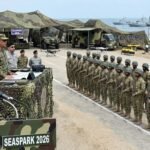
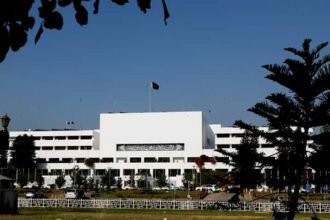
Adding to New Delhi’s unease is Dhaka’s warming relationship with Pakistan, India’s arch-rival. Last year, the two countries resumed maritime trade for the first time since Bangladesh’s 1971 independence war. Direct flights are now being planned. In June, officials from Dhaka and Islamabad met with Chinese counterparts, where they pledged joint cooperation in trade, agriculture, education, and industrial development.
Rising Trade Tensions and Diplomatic Chill
India, in response, has tightened trade restrictions on Bangladesh, limiting imports of jute, garments, plastics, and food. Bangladesh has responded with retaliatory measures of its own.
Yet despite the rhetoric and restrictions, bilateral trade remains significant. “The volume is still there, but the warmth is missing,” said former Bangladeshi ambassador to Washington, Md Humayun Kabir. “We must tread carefully and diversify alliances without isolating any partner.”
The tensions have even spilled over into sectors like healthcare. With India restricting access to its once-popular medical services, China stepped in by designating several hospitals to accommodate Bangladeshi patients — an example of what Dhaka-based academic Obaidul Haque calls “fruitful diplomacy.”
External Pressures Add to Uncertainty
Amid ongoing US-China rivalry and American trade protectionism, Bangladesh’s economy has also come under pressure. As the world’s second-largest garment exporter, Dhaka is working to ease its trade deficit with the US. In June, Yunus pledged to buy Boeing aircraft and increase imports of American agricultural and energy products in talks with U.S. Secretary of State Marco Rubio.
Still, analysts caution that regional friction — particularly with India — remains a serious challenge. The deadly May border conflict between India and Pakistan, triggered by violence in Kashmir, has only heightened regional volatility.
“Unless India sees a favorable political outcome in Dhaka, it’s unlikely to re-engage constructively,” warned Praveen Donthi of the International Crisis Group. “In fact, there may be efforts to quietly undermine the current interim administration rather than cooperate.”
As Bangladesh gears up for its 2026 elections, its leaders are attempting to balance domestic reforms with careful diplomacy in a region where geopolitical alignments are rapidly shifting — and old friendships are being tested.