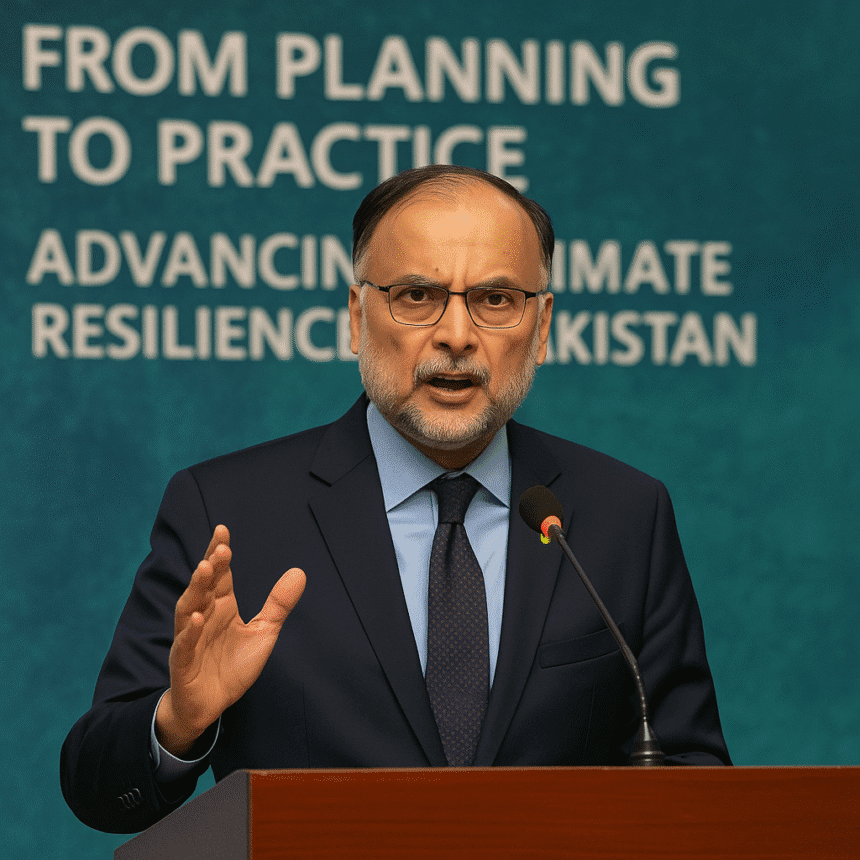
ISLAMABAD: Federal Minister for Planning, Development, and Special Initiatives, Professor Ahsan Iqbal, declared on Tuesday that climate change is no longer a distant threat but a terrifying reality, with Pakistan already suffering its devastating consequences.
Speaking at the event titled “From Planning to PRACTICE: Advancing Climate Resilience in Pakistan,” Iqbal emphasized that the effects of global warming are now visible across the country, severely impacting the environment, economy, and long-term prospects of developing nations, especially Pakistan.
“Climate change is a serious threat to the future of humanity,” Iqbal remarked. “It is no longer a theory or something far off we are experiencing its impacts right now.” He pointed to ongoing extreme weather and disasters as evidence that climate impacts have become immediate and undeniable. He also underlined that developing countries in the Global South are facing the harshest consequences.
Iqbal criticized the long-standing global demand that developing nations “do more” in response to climate change. Instead, he called on wealthier countries to fulfill their pledges on climate finance, saying, “We demand the global powers ‘Do More’ for environmental justice.” He stressed that this was not about aid or charity, but about global equity and climate responsibility.
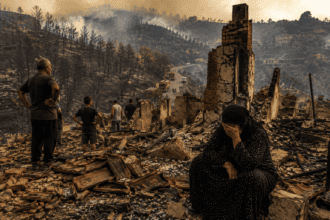
He referred to the catastrophic 2022 floods in Pakistan as a glaring example of climate disaster, which submerged one third of the country, displaced millions, and caused billions of dollars in damages. Iqbal said, “These floods were not accidental they were a symptom of a world in climate crisis.”
Further, the Minister raised alarm over rapid glacier melt, revealing that Pakistan’s over 7,000 glaciers are shrinking at the fastest rate in 60 years. This, he warned, directly threatens the Indus River system, which is crucial to 90% of Pakistan’s agricultural output. “Our food security is hanging by a thread,” he cautioned.
Iqbal also reiterated that the $100 billion annual climate finance promise by developed countries must be honored. “This is not a gift it is a necessity for environmental justice,” he stressed. He emphasized that developed nations must be held accountable for their historical contribution to global emissions, which have left countries like Pakistan vulnerable and exposed.
He assured that Pakistan is taking action on its part by making climate resilience a pillar of national policy. Climate strategies, he noted, are being embedded within the 5Es framework Economy, Education, Energy, Environment, and Equity as a commitment to a sustainable and climate resilient future.
Concluding his address, Iqbal called for a fundamental change in global attitudes toward climate action. He urged nations to treat climate change as a shared challenge, requiring collaborative global solutions, proper financial support, and fulfillment of legal obligations by developed nations.
The event served as a powerful reminder that Pakistan is on the frontlines of the climate crisis, and unless urgent, united, and equitable action is taken, the risks will only escalate for the country and the world.