

PM’s advisor blames red tape, slow fund release for blocking critical climate finance
Advisor to the Prime Minister on Climate Change and Water Resources, Dr Syed Tauqir Hussain Shah, has warned that Pakistan’s battle against worsening climate and water crises is being crippled by bureaucratic delays and sluggish disbursement of global climate funds.
Speaking at the Food and Agriculture Organisation (FAO)’s Rome Water Dialogue, Dr Shah said Pakistan stands among the world’s most climate-vulnerable nations but remains unable to access a significant share of urgently needed international climate finance due to systemic red tape.
Water crisis is no longer an abstract policy discussion; it is an existential challenge for many countries in the Global South, he told delegates, which included heads of governments, ministers, and civil society representatives from across the globe.
Dr Shah stressed that Pakistan ranks as the fifth most climate-vulnerable country, warning that the nation has now officially entered a water-scarce phase.
Our water security — and by extension, our national food security — is under threat from the twin forces of extreme climate events and chronic resource stress, he said.
From Floods to Droughts: A Dual Crisis
The advisor described Pakistan’s water emergency as a twofold disaster — “devastating abundance and crippling scarcity.”
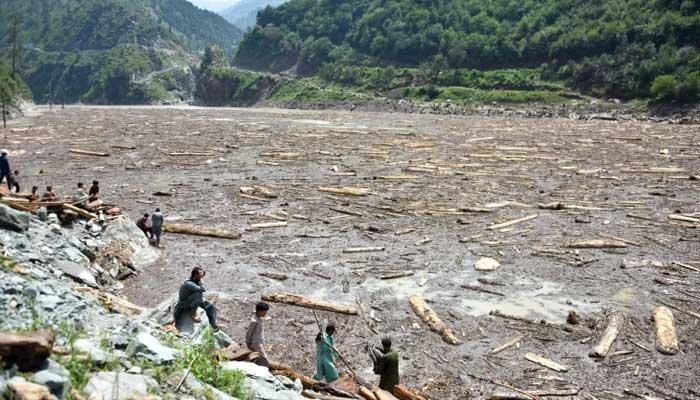
Recalling the 2022 floods that affected over 33 million people, ravaged four million acres of farmland, and deprived 10 million citizens of safe drinking water, Dr Shah said the 2025 floods had proven similarly catastrophic.
At the other extreme, he highlighted Pakistan’s dangerously low water storage capacity, sufficient for only about 30 days of supply, calling for “massive and timely investment” in climate-resilient water infrastructure.
This investment must combine traditional high-storage solutions with nature-based approaches — restoring floodplains, developing resilient irrigation techniques, and implementing effective watershed management, he added.
Global Climate Finance Under Fire
Dr Shah also delivered a sharp critique of the global climate finance system, describing it as “a paradox” that blocks developing nations from accessing the funds they desperately need.
According to Pakistan’s Nationally Determined Contributions (NDCs), the country requires $7–14 billion annually for climate adaptation by 2030. Yet, Dr Shah said, the global financing architecture is “characterised by critical failings” that prevent Pakistan from fully utilising even the funds already available.
Despite the staggering national need, Pakistan has been unable to fully utilise global climate funds due to bureaucratic bottlenecks and inefficiencies in the international financing framework,” he lamented.
Concluding his address, Dr Shah called for urgent reform of global climate finance institutions, arguing that only a more transparent, responsive, and accessible system can enable vulnerable nations like Pakistan to build resilience against escalating climate shock.