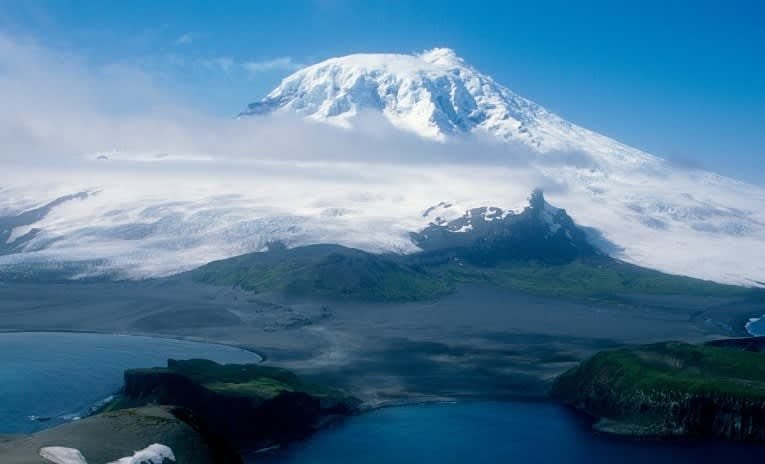
Glaciers on Australia’s remote Heard Island are shrinking at alarming rates, losing nearly a quarter of their size in just seven decades, with researchers warning some may already have vanished.
A study published in The Cryosphere found that between 1947 and 2019, the island’s glacial coverage dropped from 289 sq km to 225 sq km, while average temperatures rose by 0.7°C. The most dramatic retreat occurred on Stephenson Glacier, which has shrunk almost six kilometers, retreating an average of 178 meters annually in the past two decades.
Lead author Dr. Levan Tielidze and chief investigator Prof. Andrew Mackintosh of Monash University’s Securing Antarctica’s Environmental Future (SAEF) said the retreat is primarily driven by global warming. On the nearby Laurens Peninsula, glacial coverage collapsed from 10.5 sq km in 1947 to just 2.2 sq km in 2019, with some glaciers likely gone entirely.
Scientists warn the shrinking glaciers threaten the island’s unique biodiversity, including cushion plants, cabbage species, and nesting sites for seabirds such as penguins, petrels, and albatross. The appearance of a growing lagoon beneath Stephenson Glacier may destabilize bird habitats and accelerate erosion.
Heard Island, a UNESCO World Heritage site located 4,100 km southwest of Perth, is one of Earth’s most pristine ecosystems, home to elephant seals, penguins, and Australia’s only active volcano, Big Ben. The Australian Antarctic Program has announced two scientific expeditions later this year the first in over 20 years to study the environmental impacts.
Prof. Mackintosh stressed that while further ice loss is inevitable, the scale of future damage depends on global greenhouse gas emissions. “This is a bellwether of change for our global climate system,” he said.