Shahzeb Khanzada was walking through a Karachi mall with his family when a man started following him, recording him on his phone, and accusing him of “targeting” Imran Khan and Bushra Bibi. The anchor didn’t respond. He kept moving, head down, trying to shield his family from the scene. The video spread within minutes.
By the evening, the backlash had shifted toward the man who confronted him.
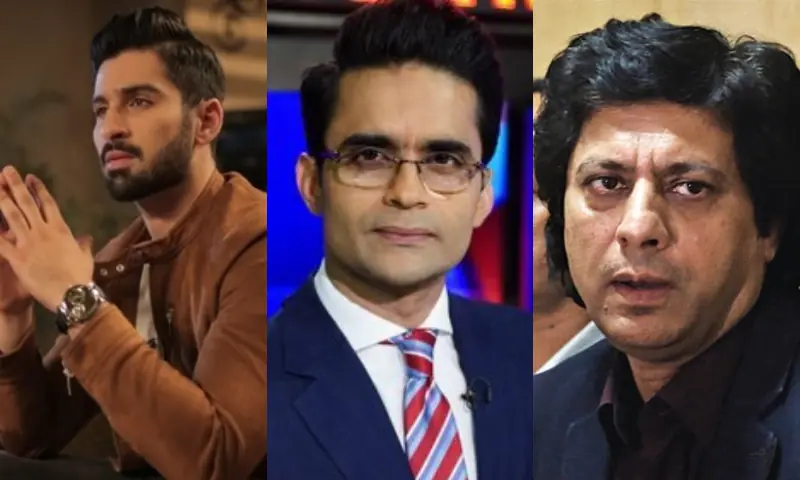
Muneeb Butt called the episode “shameful” in a sharply worded post, adding that seeing a journalist heckled in front of his family crossed every line of decency. Jawad Ahmad weighed in too, saying that disagreement never justifies public intimidation. Both men argued that the same people claiming to defend morality have no issue violating basic respect.
The confrontation appeared to be triggered by an old clip from Khanzada’s program about Bushra Bibi’s iddat case, which resurfaced recently on political pages. The man in the video repeatedly referenced that segment while trailing him through the mall.
Others in the media fraternity stepped in quickly. Senior journalists said this wasn’t normal political criticism. It was targeted harassment. A few noted how the anchor didn’t say a single word in response, which for them showed restraint rather than guilt.
Politicians reacted as well. Some condemned the behaviour. Others tried to justify it by pointing to Khanzada’s past coverage. The debate turned messy fast, which is now a routine part of Pakistan’s political climate.
But one question hung over everything. If public figures can be harassed this easily, what does that say about the safety of ordinary citizens caught in the middle of political anger they never asked to absorb?
It also reignited an old conversation inside newsrooms. Journalists have become targets of hostility that has nothing to do with their personal lives yet follows them into those spaces anyway. A few anchors privately admitted they avoid crowded places when possible. Not because they fear criticism. Because they fear moments like this one, where a simple outing with family turns into viral content.
Khanzada himself hasn’t commented beyond a brief acknowledgment that he’s aware of the video. His colleagues say he is shaken but fine.
What happens next depends on whether society treats this as an isolated stunt or a sign of a deeper erosion of public civility. Celebrities calling it out may help. But the trend behind it remains unsettled.