
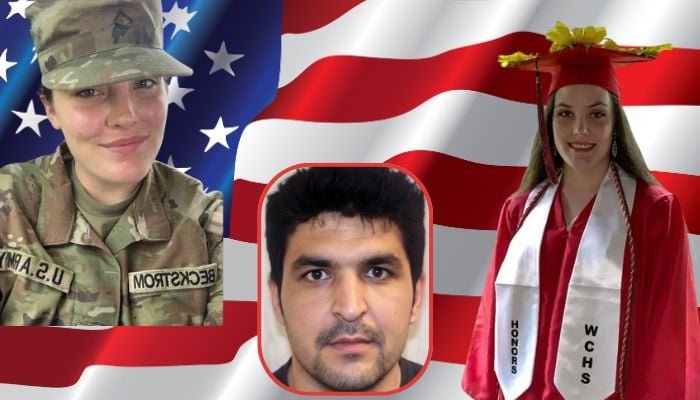
The fatal shooting of two National Guard members near the White House on November 26, 2025, has not only sparked grief across the country but also ignited a storm of speculation online. Much of it centers on the suspect, 29-year-old Afghan national Rahmanullah Lakanwal, and whether he had any prior connection to one of the victims, Sarah Beckstrom.
Within hours of the incident, social media became saturated with theories portraying Lakanwal as far more than an asylum seeker involved in a violent act. Online sleuths began circulating claims that he had ties to U.S. intelligence suggesting he had once served as a member of a CIA-backed Afghan paramilitary unit.
Another wave of speculation went even further, asserting that Lakanwal or someone linked to him had searched for Beckstrom online in the days leading up to the attack.
None of these claims have been verified, yet they spread with remarkable speed.
How a Confirmed Fact Fueled Unconfirmed Theories
Government officials did confirm that Lakanwal previously worked with a U.S.-partnered Afghan force, one of several elite units that operated alongside American intelligence agencies during the war in Afghanistan.
This single verified detail became the foundation for sweeping online narratives.
One viral post read:
“Rahmanullah Lakanwal worked with the CIA. You can’t make this up.”
The claim stretched a factual detail his role in a partner force into a broader insinuation that he was directly connected to the CIA, a leap not supported by evidence.
The Google Search Theory And What It Really Shows
A separate conspiracy trend quickly emerged, centered on the idea that someone connected to the suspect had searched for Sarah Beckstrom online before the shooting.
Users pointed to data from Google Trends, showing spikes in searches for her name in locations including Washington and Israel.
One viral post on X claimed:
“Her name was googled in Israel DAYS BEFORE the shooting.”
It amassed over 4 million views, despite experts repeatedly cautioning that Google Trends does not reflect absolute search numbers only relative interest.
For uncommon names or new stories, even a small handful of searches can appear as a dramatic spike, making the data easy to misinterpret.
No Verified Link Between Lakanwal and Beckstrom
So far, authorities have released no evidence suggesting Lakanwal knew Beckstrom, targeted her, or that anyone associated with him searched her name.
Experts say the speed at which such unverified narratives spread reflects a broader online pattern: when a crisis emerges, small fragments of fact are often merged with speculation to create a more dramatic storyline.
In this case, the tragedy and the suspect’s complex background provided fertile ground for misinformation.
Online sleuths continued pushing theories, not because of confirmed facts, but because the speculation added an illusion of hidden connections and deeper intrigue to a still-developing investigation.