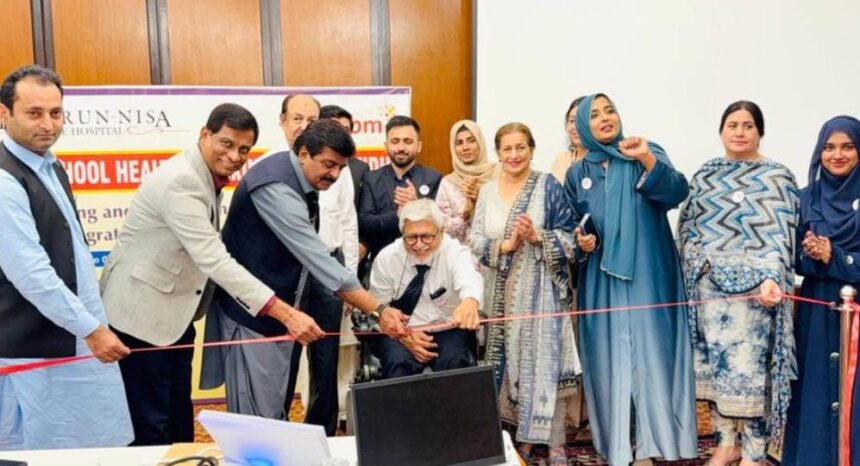
KARACHI: On World Sight Day, experts and education leaders emphasized that early eye screening and school-based health services are crucial for improving children’s learning performance and overall development.
Speaking at a ceremony held in Karachi, Sindh Minister for Education Syed Sardar Ali Shah said that poor eyesight remains an overlooked factor behind students’ poor academic performance. He elaborated:
“When children cannot see clearly, they face difficulties in understanding text, images, and classroom cues.”
The minister underscored that early detection of vision issues can prevent long-term academic and social challenges. He praised organizations and healthcare professionals working at the grassroots level for their role in promoting child health and education equity.
The event gathered key educationists, healthcare professionals, and social activists including Dr. Shehnaz Wazir Ali, Prof. Dr. Khalid Iqbal Talpur, and Dr. Muhammad Mazhar Awan, who stressed the importance of collaboration between schools and healthcare institutions.
Eye screening linked to better educational outcomes
Experts noted that many treatable eye problems among school-aged children go unnoticed due to lack of timely screening. Regular eye examinations, they said, can improve attention span, reading ability, and classroom engagement.
Dr. Awan shared that over 40,000 schoolchildren in Sindh have already been screened, with several cases requiring medical intervention. He further said:
“School-based health services can help detect and address many diseases in their early stages, giving children a fair chance to learn and thrive.”
To expand the initiative, a provincial-level school health program was announced to enhance accessibility to eye and general health services for children across Sindh.
The event reinforced the World Sight Day 2025 global theme, urging governments and communities to make eye care a fundamental part of education and public health systems.