

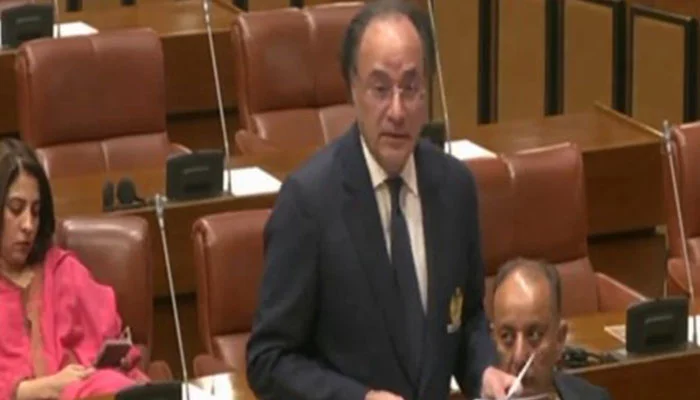
FinMin Aurangzeb says govt hopes move will increase disposable income of salaried class
- Salaried class bears burden of inflation and pays taxes: FinMin.
- Aurangzeb says govt’s move will hike their disposable income.
- Individuals earning Rs600,000 to Rs1.2 million pay 5% tax currently
In a major relief for Pakistan’s salaried class, Finance Minister Muhammad Aurangzeb announced a sharp cut in income tax rates for individuals earning up to Rs1.2 million annually. Addressing the Senate on Saturday, the minister said the tax rate for this income bracket would be reduced from 5% to just 1%.
“This decision reflects our recognition of the salaried class, which not only bears the brunt of inflation but also diligently pays taxes,” said Aurangzeb, noting the move aligns with Prime Minister Shehbaz Sharif’s directives. The new rate marks a further reduction from the 2.5% originally proposed in the FY2025–26 budget.
The government hopes the cut will increase disposable income and rebuild public trust in the taxation system. “This is not just a fiscal adjustment — it’s a signal of our commitment to fairness,” Aurangzeb added.
Wider Tax Relief in Budget FY26
The Rs17.57 trillion federal budget, unveiled earlier this week, proposes broad-based income tax relief for the salaried class:
-
For annual income up to Rs2.2 million, the tax rate will drop from 15% to 11%.
-
For income between Rs2.2 million and Rs3.2 million, the rate will fall from 25% to 23%.
-
A 1% reduction in surcharge has also been proposed for those earning over Rs1 million, aimed at retaining skilled professionals and slowing brain drain.
Solar Panel Tax Reduced
Aurangzeb also confirmed that the controversial proposed 18% tax on imported solar panels has been revised downward to 10% following concerns from stakeholders. He warned importers against hoarding and unjustified price hikes, stating that punitive action would be taken against profiteers.
The original tax hike, meant to protect and encourage domestic solar manufacturing, sparked debate amid Pakistan’s ongoing solar energy expansion. Net metering capacity reached 2,813 MW as of March 2025, according to the Pakistan Economic Survey.
FBR Target and Fiscal Outlook
The government has set a robust tax collection target of Rs14.13 trillion for the Federal Board of Revenue (FBR), reflecting an 18.7% increase over last year. Provinces are expected to receive Rs8.21 trillion of this through federal transfers.
Non-tax revenues are projected at Rs5.15 trillion, bringing the federal government’s net income to Rs11.07 trillion. However, with total expenditures estimated at Rs17.57 trillion — including Rs8.21 trillion for debt servicing — Pakistan remains deeply reliant on borrowing.
Aurangzeb emphasized fiscal restraint, noting that federal expenditures had only risen 1.9% year-on-year, compared to 12% hikes in past budgets. “This budget is about targeted relief and long-overdue reforms,” he concluded.
-