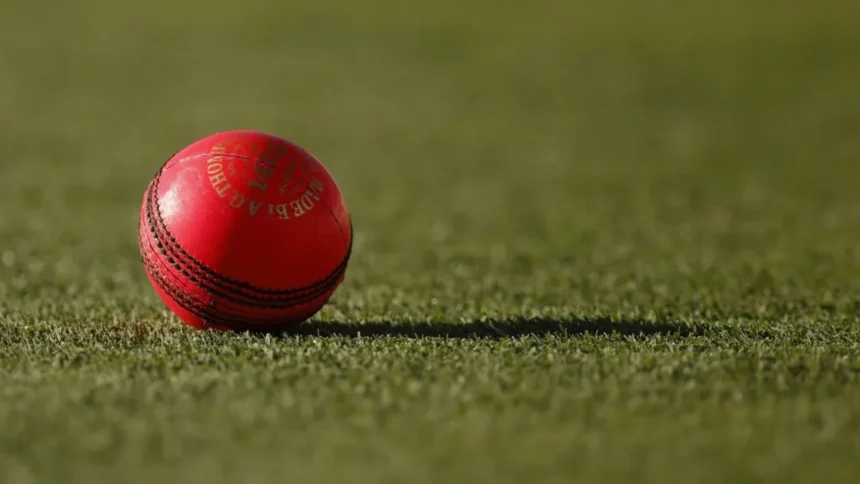
Ahmedabad, June 1 — Test cricket may soon have a new answer to one of its oldest irritations: bad light. The International Cricket Council has approved a trial that would allow teams to switch from the traditional red ball to a pink ball during a Test match when fading light threatens to stop play.
The move, cleared at the ICC Board meeting in Ahmedabad, is aimed at reducing the number of overs lost because of poor visibility — a problem that has frustrated players, umpires, broadcasters and, frankly, plenty of paying spectators over the years. The trial will not be automatic, though. Both teams must agree to the arrangement before the start of a series or match.
Under the likely working model, a Test would still begin with the red ball. But if the light deteriorates later in the day, floodlights could be used and the remaining overs played with a pink ball, which is generally easier to see under artificial lighting. For example, if 75 overs have been bowled and 15 overs remain when light becomes an issue, those overs could be completed with the pink ball — provided both sides had already signed off on the idea.
The ICC described the measure as a way to “maximise play” in cases of anticipated bad light. It’s a practical tweak, but not a small one. Test cricket has always been built around the red ball, and changing the ball mid-match could affect conditions, tactics and even the balance between bat and ball.
That’s where the debate will probably begin.
Pink balls have been used in day-night Tests since 2015, and they’re designed to remain visible under lights. But players have often argued that they behave differently from red balls — sometimes swinging more, moving off the seam, or becoming harder to pick up during twilight. Some teams, including India in the past, have been cautious about pink-ball Tests, especially at home, where the ball’s behaviour can change the rhythm of a match quite sharply.
Still, the ICC’s thinking is easy to understand. A full day of Test cricket is scheduled for 90 overs, yet bad light has repeatedly forced early finishes even when floodlights are available. The sight of players walking off while spectators sit under bright stadium lights has become one of the sport’s more awkward modern images. This trial is, in many ways, an attempt to fix that contradiction.
The decision was part of a broader set of changes approved by the ICC Board. Reports from the meeting also noted that coaches will be allowed to consult players during scheduled drinks intervals, match officials will get access to Hawk-Eye data while reviewing suspected illegal bowling actions, and other playing-condition adjustments are being introduced across formats.
For now, the red-to-pink ball switch remains only a trial. Its success will depend on how often teams agree to use it, whether players feel the contest remains fair, and whether it actually saves enough overs to justify the change.
But the message from cricket’s governing body is clear enough: Test matches shouldn’t keep losing play to bad light when there may be a workable solution sitting right there under the floodlights.