
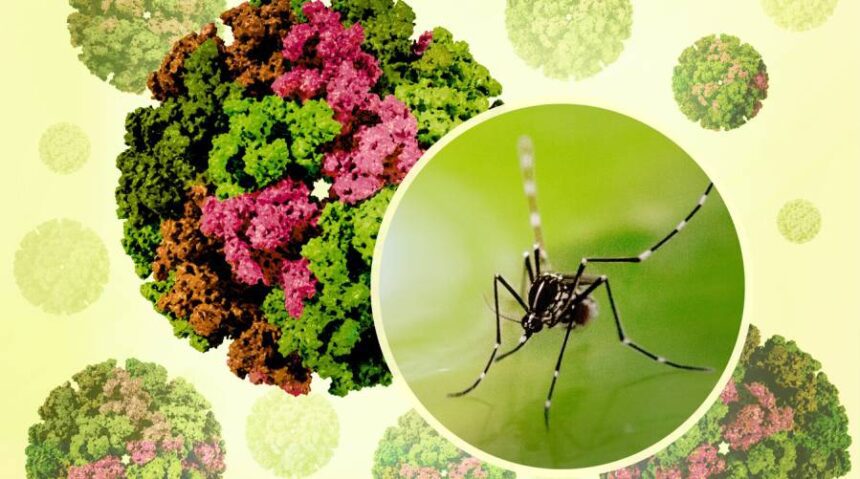
A comprehensive new mapping study has found that the mosquito-borne virus Chikungunya may pose a far greater global risk than previously estimated — with India emerging as the country most likely to experience the largest long-term impact.
Researchers from the London School of Hygiene & Tropical Medicine (LSHTM), Nagasaki University and the International Vaccine Institute used a machine-learning model to map areas suitable for chikungunya transmission — combining mosquito vector data (Aedes aegypti / Aedes albopictus), climate, precipitation, socio-economic indicators and geographic factors.
Key findings
- Globally, the study estimates about 14.4 million infections annually under current conditions, with a “higher risk” scenario projecting up to 34.9 million infections per year.
- In India alone, roughly 5.1 million people could be at risk annually in the “focal” scenario, with that number rising to 12.1 million under the “at-risk” scenario.
- The report highlights that chronic health effects – especially persistent joint pain and disability – account for 54% of the overall chikungunya burden, and that adults aged 40–60 are disproportionately impacted.
- The top three countries expected to carry the greatest long-term burden are India, Brazil and Indonesia, which together may account for nearly 48% of the global burden.
- Notably, the study emphasises that risk is not limited to tropical zones; transmission potential exists in many regions previously considered low-risk.
What about Pakistan?
The modelling paper does not provide specific estimates for Pakistan. While Pakistan shares environmental and mosquito-vector conditions that may make it vulnerable, the study focuses on countries with stronger data availability and does not highlight Pakistan by name. That gap underscores the need for national surveillance and data-driven modelling specific to the country’s context.
Why this matters
Chikungunya infection frequently causes high-fever and joint pain, but its long-term effects on disability, workforce capacity and health-care systems have been under-recognised. The study’s authors argue that these findings can inform vaccine deployment strategies and help governments prioritise high-risk regions and age groups.
In India, for example, the high estimated number of people at risk underscores the urgency of strengthening vector control and linking outbreak preparedness with long-term disability support.
Expert commentary
Lead author Hyolim Kang of LSHTM said: “It’s been widely thought that mosquitoes carrying chikungunya would be confined to subtropical or tropical continents, but our analysis has found that the risk extends way beyond these regions.”
Her co-author, Kaja Abbas, added that the model can “help prioritise regions and target age groups for chikungunya vaccine introduction.”