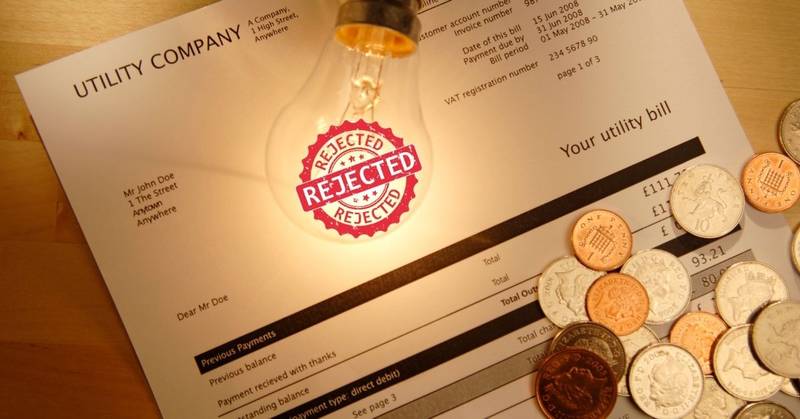
Pakistan’s industrial sector has dismissed government claims of reducing the circular debt and cutting electricity tariffs, saying that instead of relief, the burden on consumers continues to rise as distribution companies seek fresh tariff hikes.
Power distribution companies (DISCOs) have approached the National Electric Power Regulatory Authority (NEPRA) for permission to recover Rs21.7 billion from consumers for the first quarter (July–September) of FY2025–26, despite earlier assurances of tariff relief following revised deals with independent power producers (IPPs).
During the last fiscal year, capacity payments dropped significantly by Rs47 billion in the third quarter and Rs53 billion in the fourth mainly due to the termination of several IPP agreements. However, industry experts now warn that these gains are being reversed.
At a NEPRA public hearing on Thursday, industry representatives strongly opposed the government’s stance that the Rs79 billion rise in circular debt during July September 2025 was merely “seasonal.” They argued that such an increase contradicts official claims that the circular debt issue had been resolved through bank settlements and a Rs3.23 per unit surcharge imposed on consumers.
“The government promised lower capacity charges after revising IPP contracts, yet the bills keep rising,” said Tanveer Bari, an industry representative. He urged NEPRA to reject tariff increases linked to fuel cost adjustments.
Rehan Jawed, representing Karachi industries, criticised the incremental power package announced for industries and agriculture, calling it ineffective due to high rates. “The tariff under the package is Rs22.90 per unit it must be reduced to Rs16 to make any real impact,” he said. Jawed added that industries were already paying Rs160 billion in cross-subsidies, demanding that the government fund such subsidies through the budget instead.
NEPRA officials acknowledged challenges in curbing circular debt, citing low bill recovery rates and persistent losses in public-sector companies. They confirmed that a Rs180 billion reduction in capacity payments was included in the reference tariff but warned that systemic issues continued to undermine sustainability.
According to the DISCOs’ petitions, the Rs21.7 billion capacity charge impact was partly offset by Rs13.3 billion in savings from reduced operation costs, lower system losses, and market operator fees. Still, companies requested NEPRA to allow the recovery of Rs8.41 billion from consumers under quarterly adjustments.
Among DISCOs, Lahore Electric Supply Company (LESCO) reported the highest capacity charges of Rs8.45 billion, followed by Multan (MEPCO) with Rs4.35 billion, Gujranwala (GEPCO) with Rs4.22 billion, and Faisalabad (FESCO) with Rs2.33 billion.
In contrast, Hyderabad Electric Supply Company (HESCO) recorded a negative adjustment of Rs3.21 billion, the largest among all, followed by Tribal (TESCO) and Peshawar (PESCO).
Despite government claims of progress, experts warn that the circular debt crisis remains far from over, and without meaningful reforms, the energy sector will continue to burden both industry and consumers alike.