
A serious health crisis is emerging in the poor and densely populated area of Site Town, Karachi, due to the spread of HIV (Human Immunodeficiency Virus) among children. Over the past few weeks, even children as young as one year old have been affected, and at least two children have died, while the number of affected children continues to rise.
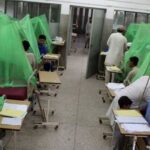
According to reports, the center of this crisis is Kalsoom Bai Welika Social Security Site Hospital (Welika Hospital), where children brought for treatment of various illnesses were diagnosed with HIV.
This issue came to light when local residents, with the support of their local government representatives and political leadership, took a strong stance upon discovering the situation.
Irshad Khan, Vice Chairman of UC One, which includes areas such as Pathan Colony and Bawani Chali in Site Town, stated that in August 2025, an 18 month old girl fell ill and was admitted to Welika Hospital.
He explained that when the girl’s fever and weakness persisted, she was taken to a private hospital, where doctors suspected a more serious condition. After conducting various tests, she was diagnosed with HIV. When the private hospital doctors inquired about her previous treatment, they were informed that she had been treated at Welika Hospital, which raised alarm.
He said that afterward, a five member committee consisting of local leaders from political parties including Jamaat e Islami, PPP, and ANP was formed.
The committee, headed by Irshad Khan of PTI, firmly demanded that the Welika Hospital administration screen all children who had received treatment in the past few months for HIV. Initial testing revealed that at least 18 children tested positive for HIV, aged between one and nine years.
Irshad Khan stated that despite the severity of the issue, the hospital administration is not showing seriousness, and no immediate action has been taken by the Health Department. The committee visits the hospital daily but receives no effective response. Hundreds of children are still present in homes, streets, and schools in the area, suggesting the problem could be widespread.
A Welika Hospital official stated that screening is ongoing and some children have tested positive for HIV, but the total number of affected children has not been disclosed.
Dr. Kanwal Mustafa, Additional Director of the Sindh Health Department, said that her team immediately acted to establish an Antiretroviral Therapy (ART) center in the hospital and is expanding HIV treatment and care facilities in the area. She added that 31 ART centers have been established across Sindh to provide free consultation, diagnosis, and treatment to HIV affected individuals and their children.
Dr. Kanwal explained that the spread of HIV in Pakistan is caused by several factors, including the reuse of syringes or IV drips by unlicensed practitioners, unregulated blood banks, poverty, and illiteracy. Many Pakistanis consider injections an immediate relief, leading to overuse. Additionally, risky behaviors of traditional healers and drug users, and the need for blood transfusions due to anemia in children under five, increase the risk of HIV transmission.
Irshad Khan added that during hospital visits, he and other committee members personally observed syringes being reused, which was confirmed by some hospital staff. They noted that such practices in a government hospital are alarming and could be a major cause of HIV spread.
This situation indicates that the spread of HIV among children in Site Town is a serious and urgent issue that requires immediate attention and serious action from both the hospital administration and the government.