
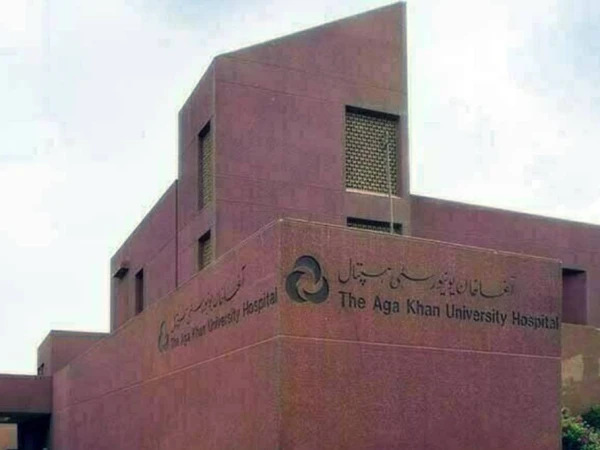
In Pakistan, treatment of thalassemia and sickle cell anemia will soon no longer be limited only to safe blood transfusion, as research on advanced genetic technology CRISPR-Cas9 is in its final stages at Aga Khan University Hospital.
According to details, after this research, defective genes can be corrected and patients suffering from these hereditary blood disorders can be given a normal life.
Under this technology, experts are ready to begin clinical trials on children and are only waiting for approval from DRAP. At the same time, work is also underway to deliver this treatment into the body through injection like a medicine.
Regarding this gene editing therapy, Associate Professor Dr. Afsar Ali Mian from the Center for Regenerative Medicine and Stem Cell Research at Aga Khan University Hospital explained that CRISPR-Cas9 is a technology that works like molecular scissors, through which the genetic structure of the human genome can be edited.
Dr. Afsar Ali Mian said that through this technology, characters inside any gene can be deleted or added, while defective genes can be corrected for the treatment of genetic and congenital diseases.
He said that work on this technology has already been completed at the pre clinical level and it has been formally developed.
There are basically two approaches to this treatment. The first approach is called ex-vivo, in which stem cells are isolated from the patient’s blood. Gene editing is performed on these cells using CRISPR-Cas9, after which they are injected back into the patient’s body. He said that after approval from the regulatory body, preparations for clinical trials on children using this method will be completed.
The second approach is the one currently being worked on at Aga Khan University, under which efforts are being made to develop CRISPR-Cas9 as a drug. For this purpose, work is underway to load it into liposomes or exosomes to make it directly injectable, similar to how the COVID vaccine was developed.