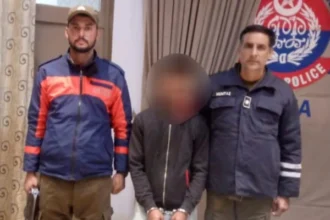
Karachi’s street-crime problem has taken another unsettling turn, with fresh footage and police action underscoring how quickly robbery tactics in the city appear to be shifting. CCTV footage from Bahadurabad showed suspects using a double-cabin pickup during a theft, while in a separate PIB Colony incident, motorcycle-riding robbers allegedly snatched a citizen’s bike. Police also said they had arrested an eight-member gang allegedly involved in more than 100 robberies.
What stands out here is not just the arrest itself, but the method. Karachi’s street crime has long been associated with motorcycle-borne snatchers, so the use of a pickup in one of the incidents has caught attention because it suggests some criminals may be adapting their approach to avoid suspicion, move faster in groups, or carry out bigger thefts with more confidence. The Bahadurabad and PIB Colony cases, taken together, paint a picture of a threat that is not static. It keeps changing.
Police have not publicly laid out the full operational details of the eight-member gang or the exact breakdown of all the cases tied to it. Still, the claim that the suspects were linked to over 100 robberies is striking on its own and likely to raise questions about how long the group had been operating, how many neighborhoods were affected, and whether previous complaints had pointed investigators in their direction.
The wider backdrop makes the case even more serious. Recent crime figures show Karachi recorded 3,624 vehicle theft and snatching incidents in March 2026 alone, including 157 cars and 3,467 motorcycles. The same data also showed 1,265 mobile phones were snatched or stolen during that month. Those numbers don’t just suggest a bad patch. They suggest a city still struggling to contain routine, high-volume street crime despite repeated crackdowns.
For residents, that is the part that really lands. These are not isolated, once-in-a-while incidents. They are the kind of crimes that reshape everyday behavior: which roads people avoid, whether they stop at traffic lights after dark, whether they carry cash, even how they park or commute. And when suspects appear comfortable enough to use vehicles other than motorcycles, it adds another layer of anxiety because people begin to feel the threat could come from almost any direction.
The latest arrest will likely be presented by police as a breakthrough, and to be fair, taking a group allegedly tied to more than 100 robberies off the streets would be significant. But in Karachi, the public mood tends to be shaped less by arrest announcements and more by whether the numbers actually fall in the weeks ahead. That’s the real test now. One gang has been caught, according to police. The bigger question is whether the system can slow the broader machinery of street crime that continues to unsettle the city.