
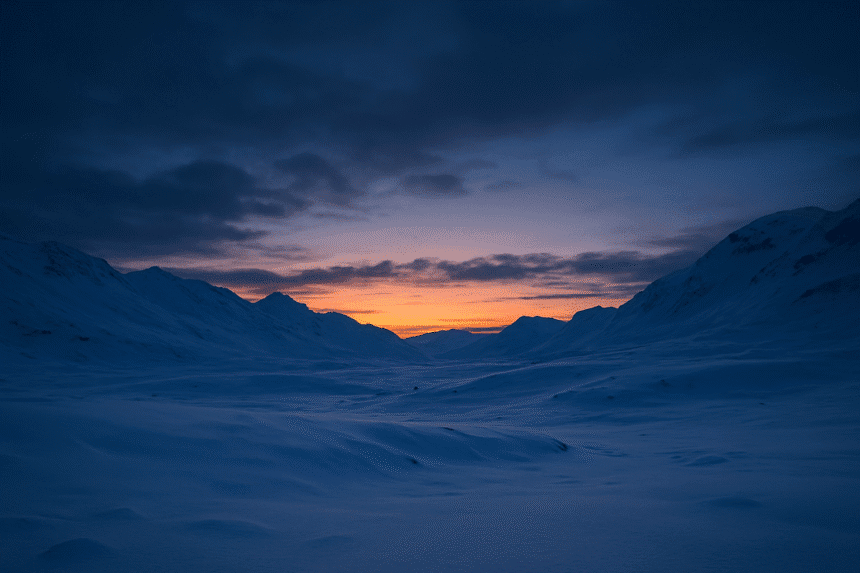
The sun has set beyond the southern horizon this year and will rise next on January 22, 2026
Alaska’s northern regions are set to experience the longest polar night starting January 22, 2026, during which the sun will remain completely below the horizon for several months. This phenomenon occurs annually due to the tilt of the Earth’s axis and the sun’s movement near the North Pole.
Local residents and scientists adjust their daily routines to cope with the extended darkness. Schools, workplaces, and recreational schedules are modified according to the absence of sunlight, while special measures are taken to maintain physical and mental well-being.
Environmental experts highlight that the polar night significantly impacts wildlife and ecosystems. Animals, birds, and local forest life adapt their activities to the prolonged darkness. The period also holds critical importance for astronomical and meteorological research, as scientists closely monitor the sun’s movement and seasonal patterns.
Although polar nights occur every year in the world’s Arctic regions, Alaska experiences some of the longest and most pronounced events, affecting not only the environment but also human lifestyles in noticeable ways.