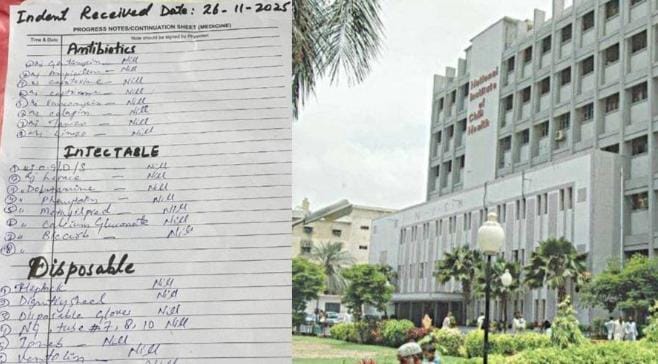
KARACHI: The National Institute of Child Health (NICH) in Karachi is facing a critical shortage of medicines, leaving children in emergency and inpatient wards without essential treatment and forcing families to purchase drugs, syringes, and nutritional supplies from outside pharmacies. Hospital staff and reports say pharmacy shelves are empty despite an annual government allocation of PKR 2.5 billion.
According to healthcare workers and ward officials, requests for medicines across multiple departments — including emergency services — remain unfulfilled, creating a troubling situation for children referred from across Sindh. Executive Director Dr Nasir Saleem was not available for comment when approached.
What has happened and who is affected
Hospital sources describe a broad supply gap affecting common and life-saving medicines used in pediatric care. The shortage affects:
- Emergency treatments for acute childhood illnesses
- Inpatient medication regimens for chronic and acute patients
- Basic supplies such as syringes, intravenous fluids, and nutritional support
Families of admitted children have been compelled to buy required medicines from outside, adding financial and logistical burdens at a time of clinical vulnerability.
Clinical, public-health implications
A sustained medicine shortage at a major pediatric referral hospital can have immediate and serious consequences:
- Delayed or suboptimal treatment for sick children
- Increased financial strain on families who must source medicines externally
- Higher risk of adverse outcomes if essential medicines are not promptly available
- Erosion of trust in public healthcare services, especially for patients traveling from other districts
Healthcare management experts stress that adequate procurement, inventory oversight, and timely distribution are vital to ensure uninterrupted pediatric care at referral centres such as NICH.
Operational, governance questions
The NICH budgetary allocation highlights accountability and management concerns. Effective supply-chain management requires clear procurement plans, routine stock audits, and contingency supplies. Hospital administrators and provincial health authorities should clarify:
What needs to happen next
To resolve this shortfall and prevent recurrence, stakeholders should prioritize:
- A rapid stock audit and emergency procurement to refill essential drugs and supplies;
- A public update from NICH and Sindh health authorities explaining causes and recovery timelines;
- An independent review of procurement and budget execution procedures;
- Introduction of stronger inventory controls and contingency stock policies for pediatric referral hospitals.
- Restoring steady medicine supplies to NICH is essential for safeguarding child health across Sindh and maintaining confidence in public pediatric care.