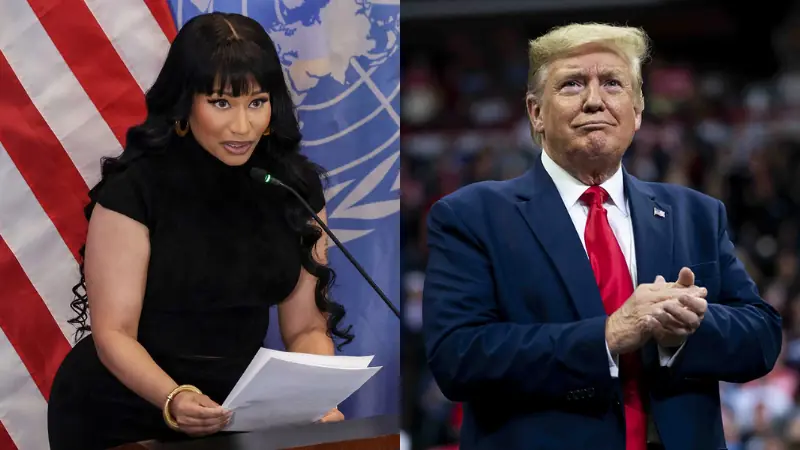
It’s not every day you see a global rap superstar step into a geopolitical storm, but that’s exactly what happened when Nicki Minaj walked into the United Nations event this week and, somehow, ended up becoming the loudest celebrity voice in a very Trump-shaped narrative about Nigeria.
A Strange, Head-Turning Moment at the UN
So here’s the scene — and honestly, it surprised a lot of people.
On 18 November 2025, Minaj delivered a speech at a U.S.-backed UN gathering, talking about the dangers facing Christians in Nigeria. She spoke with real emotion, saying things like “faith is under attack” and that entire communities “live in fear simply because of how they pray.” She even thanked Donald Trump directly, giving him credit for “raising this issue when so many others looked away.”
For a moment, you could feel the room shift — not because people were shocked by violence in Nigeria (sadly, that’s not new), but because they didn’t expect her to be the messenger.
Why Minaj’s Presence Hit Like a Jolt
Minaj isn’t a political analyst, a diplomat, or a human-rights researcher. She’s a globally famous hip-hop artist. So when she walked in echoing the Trump administration’s talking points almost line-for-line, people noticed. Some admired the boldness; others wondered if she fully understood the complexities she was stepping into.
Her massive fanbase means this wasn’t just another policy speech. Millions of people who might never read political news suddenly heard a simplified version of Nigeria’s problems — and that’s where things get tricky.
Nigeria Pushes Back — Hard
Within hours, Nigerian officials responded. They didn’t mince words either.
The presidency essentially said: hold on, this isn’t a “Christian persecution crisis” the way it’s being framed abroad. Yes, tragic attacks happen, but Muslims and Christians both face violence in different regions. The roots, they insisted, are tangled up in land disputes, ethnic tensions, armed banditry, and plain old insecurity — not simply religious hatred.
Several analysts echoed that, warning that flattening Nigeria’s issues into a single religious narrative can do more harm than good. Some even suggested Minaj unintentionally amplified a U.S. political agenda rather than offering an independent humanitarian view.
How Did Minaj End Up Here?
Believe it or not, this moment didn’t come out of nowhere. Mike Waltz, the U.S. Ambassador to the UN, had been praising Minaj ahead of the event. The Trump administration, too, has been leaning heavily into messaging about Christian persecution abroad — a topic that energizes parts of its political base.
So when Minaj stepped up to the podium, it felt less like a random celebrity cameo and more like a coordinated attempt to give the administration’s narrative a glamorous, instantly viral megaphone.
And yes, it worked. The clip shot around social media within minutes.
What Happens Now?
That’s the million-dollar question.
Nigeria may feel the ripple effects first. When a U.S. celebrity aligns with a political administration’s stance on a sensitive issue, it can force local governments to respond publicly, even if they’d rather focus on their own internal dynamics.
The U.S. might also see political movement — Trump’s team has been signaling a readiness to “prioritize” Christian persecution abroad. If Minaj’s speech fuels public attention, it could speed up those plans.
As for Minaj… well, that’s harder to predict. She could double down and become a recurring voice in this space, or she might step back once the backlash hits full force. Either way, her influence is now tangled up in a debate far bigger than the music world.
The Bigger Picture
This moment — surprising as it seemed — is part of a growing trend: celebrities becoming vessels for political narratives that outsize their own fields. And whether intentional or not, Minaj just became the face of a highly disputed storyline about Nigeria, religion, and U.S. foreign policy.
It’s messy. It’s emotional. And it’s probably not going away anytime soon.