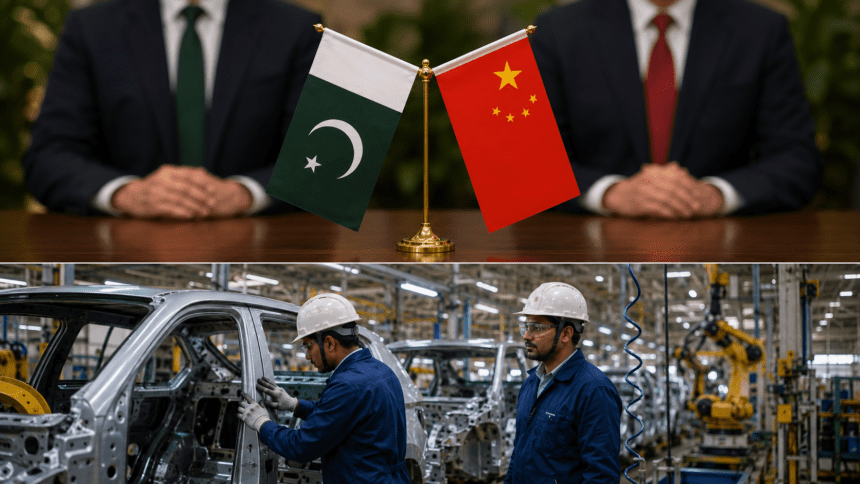
Changzhou, China — Pakistan has moved to deepen industrial cooperation with China through a fresh round of high-level engagements in Changzhou, where officials from both sides discussed technology transfer, investment partnerships and stronger manufacturing links.
The meetings, held on May 23, came as Prime Minister Shehbaz Sharif began his official visit to China from May 23 to 26, a trip Islamabad says is aimed at reviewing bilateral cooperation in political, economic and strategic areas.
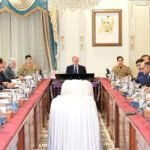
According to Pakistan’s official statement, Special Assistant to the Prime Minister on Industries and Production Haroon Akhtar Khan led the industrial cooperation push, with talks centered on investment, modern manufacturing, technology sharing and opportunities for Pakistani and Chinese firms to work together in practical, project-based ways.
The focus is clear: Pakistan wants more than trade. It wants Chinese companies to help build local industrial capacity.
That means joint ventures, local assembly, technology transfer and, eventually, export-oriented production from Pakistan. For a country struggling with low industrial productivity and repeated balance-of-payments pressure, this is not just diplomatic language. It’s an economic necessity.
A key part of the latest engagement also involved Pakistan’s agriculture sector. Minister for National Food Security Rana Tanveer Hussain joined meetings with Changfa Group, a Chinese manufacturer of tractors, harvesters, diesel engines and agricultural machinery. The two sides discussed farm mechanization, advanced agricultural equipment, joint ventures and local assembly of machinery in Pakistan.
An MoU was also signed between Kingsbridge Ventures and Changfa Group to explore cooperation in agricultural machinery production, technical collaboration and phased localization in Pakistan. Officials believe such cooperation could help improve agricultural productivity and strengthen food security, especially at a time when farmers face rising input costs and outdated machinery in many parts of the country.
The Changzhou meetings fit into a broader shift in Pakistan-China economic ties. For years, the China-Pakistan Economic Corridor was known mainly for roads, power plants and infrastructure. Now, Islamabad is trying to move the relationship into what officials often call “CPEC Phase II” — a stage built around industrialization, special economic zones, agriculture, technology and exports.
Earlier this month, Pakistani and Chinese companies signed 52 MoUs and trade agreements at a Pak-China B2B Business Conference in Lahore, covering sectors including home appliances, electrical equipment and battery storage.
Haroon Akhtar Khan has also recently argued that Pakistan should not remain only a consumer market for Chinese products, but should become a manufacturing and technology partner. He identified home appliances, electrical devices and battery storage systems as future-oriented sectors where Pakistan could attract investment and build local capability.
The timing matters. Prime Minister Shehbaz Sharif’s China visit is taking place as both countries mark 75 years of diplomatic relations. Pakistan’s Foreign Office said the visit would provide an opportunity to reaffirm the “all-weather strategic cooperative partnership” and review cooperation in several areas, including trade, investment, technology and agriculture.
Still, the real test will be implementation. Pakistan has signed many agreements with foreign investors before, including with China, but follow-through has often been slowed by bureaucracy, policy uncertainty, infrastructure gaps and security concerns.
That last issue remains sensitive. Chinese workers and projects in Pakistan have faced repeated militant attacks in recent years, and Beijing has regularly pressed Islamabad to improve security arrangements. During an earlier visit to Beijing, Shehbaz Sharif pledged to reduce bureaucratic delays and enhance protection for Chinese workers linked to CPEC projects.
For now, the message from Changzhou is optimistic. Pakistan is pitching itself as a destination for Chinese industrial relocation, manufacturing partnerships and agricultural technology. China, meanwhile, gets a familiar strategic partner with a large workforce, access to regional markets and a long-running economic corridor already in place.
But turning meetings into factories is the hard part.
If the latest understandings lead to actual investment, machinery localization and new production lines inside Pakistan, the cooperation could give the country’s industrial base a much-needed lift. If not, it risks becoming another round of promising statements that look good on paper but fade before reaching the factory floor.