

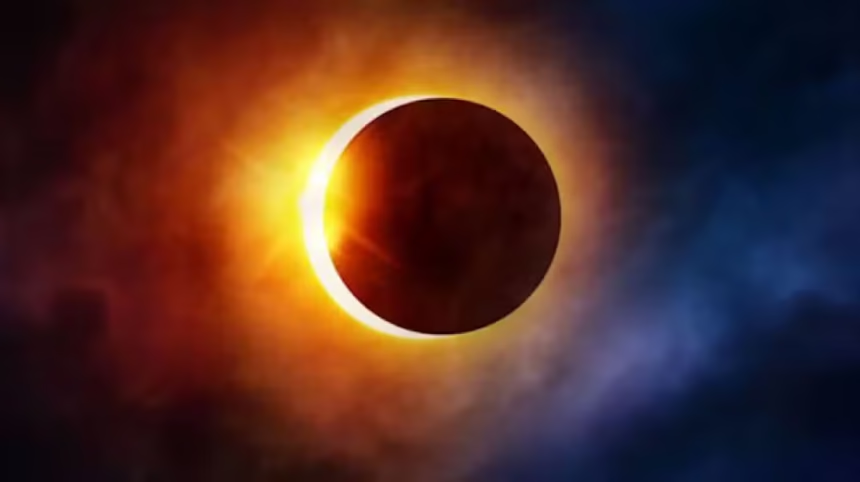
Pakistan to witness only one partial lunar eclipse next year, as PMD unveils 2026 celestial event schedule
The Pakistan Meteorological Department (PMD) has announced the official schedule for solar and lunar eclipses set to occur in 2026, marking four major celestial events — two solar and two lunar eclipses — during the year.
According to the PMD, the first solar eclipse of 2026 will take place on February 17, starting around 3:00 PM, reaching its peak at 5:00 PM, and concluding by 7:30 PM (Pakistan Standard Time). However, this eclipse will not be visible from any part of Pakistan, as its path will mainly cover regions in the southern hemisphere, including Antarctica, South America, and southern Africa.
The first lunar eclipse will follow on March 3, and unlike the solar event, it will be partially visible from Pakistan, allowing local skywatchers to witness part of the Moon darkening as it passes through the Earth’s shadow.
Later in the year, a total solar eclipse will occur between August 12 and 13, visible in parts of Greenland, Iceland, northern Spain, and the Arctic region, but again not observable from Pakistan. The second lunar eclipse of the year is expected on August 28, yet this too will not be visible locally, as its visibility will be limited to regions in Europe, Africa, and the Americas.
Astronomy experts note that 2026 will be an exciting year for skywatchers globally, offering both “ring of fire” and total eclipse experiences. However, they urge the public to use certified solar filters or eclipse glasses when observing solar eclipses to prevent eye injury.
The PMD added that while only one of these events will be visible from Pakistan, enthusiasts can still follow the eclipses through live international broadcasts and updates from NASA and other observatories around the world.