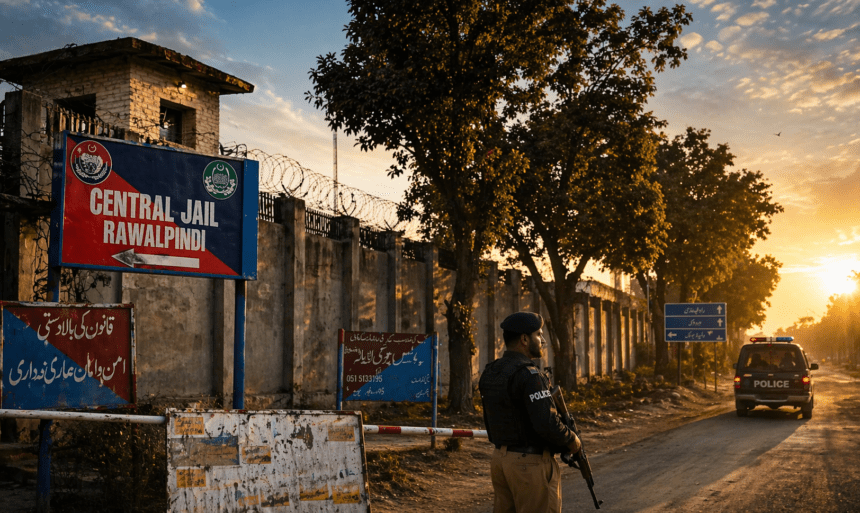
According to local media reports, a list of senior PTI leaders had been submitted in advance for the meeting. It included Barrister Gohar Ali Khan, Salman Akram Raja, Latif Khosa, Babar Awan, Hamid Khan and Intizar Panjotha. But by the time the allotted meeting window ended, no meeting had taken place.
The development adds to a string of similar episodes in recent weeks, with PTI repeatedly alleging that access to Imran Khan is being obstructed despite court orders allowing regular meetings with family members, lawyers and party representatives.
The issue goes back to earlier rulings of the Islamabad High Court, which restored Khan’s right to meet selected visitors twice a week, typically on Tuesdays and Thursdays, under a defined procedure. PTI says that in practice, those orders have been inconsistently implemented, with party leaders sometimes stopped near the jail, delayed at checkpoints, or denied entry altogether.
In earlier incidents, PTI leaders and Khan’s sisters had reached the jail or nearby areas only to be turned back by police or prison authorities. On some occasions, these failed visits triggered protests and brief confrontations outside Adiala Jail. The matter has since become more than a routine prison-access issue; it now sits at the center of a broader political and legal battle over Khan’s treatment in custody.
Khan’s family has also voiced concern in recent days. His sisters have complained that they too have faced repeated difficulties in seeing him, even on designated visitation days. PTI leaders argue this reflects a wider pattern of restrictions around the former premier, who remains the party’s central political figure despite his imprisonment.
The access dispute has also taken on greater significance because of continuing concern over Khan’s health and prison conditions. His legal team and party officials have, at different points, raised questions about medical access and independent examination, making each missed meeting more politically charged than it might otherwise seem.
Thursday’s missed visit may appear, on the surface, to be a procedural lapse. But in Pakistan’s current political climate, every blocked or failed meeting with Imran Khan quickly becomes a test of whether court directives are actually being enforced — and whether the state is willing to allow even limited, legally sanctioned access to one of the country’s most consequential opposition leaders.