
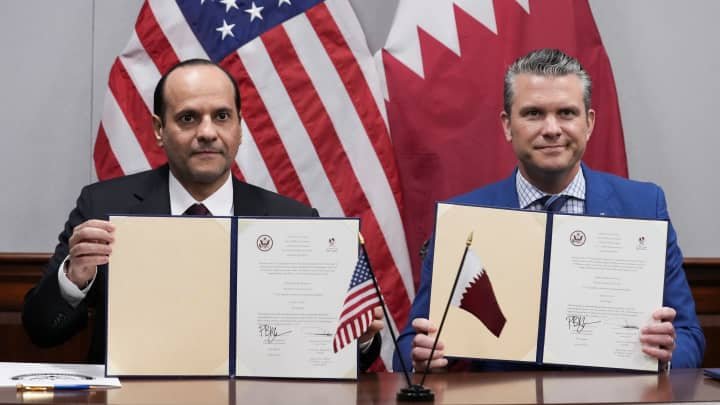
In a major step toward strengthening defense ties, the United States and Qatar have agreed to establish a Qatari Air Force training facility at Mountain Home Air Force Base in Idaho. The pact, signed on October 10, 2025, by U.S. Defense Secretary Pete Hegseth and Qatari Defense Minister Sheikh Saoud bin Abdulrahman Al Thani, marks a significant milestone in their long-term military cooperation.
The new facility will host Qatar’s advanced F-15QA fighter jets and pilots, who will train side by side with American airmen to boost joint readiness, coordination, and air combat proficiency. The initial phase of the project will deploy about a dozen aircraft and nearly 300 personnel from both nations over the next decade.
Officials from the Pentagon emphasized that the site will not be considered a foreign base on U.S. soil. While Qatar will fund the construction, the facility will remain under full American command, integrated into the existing Mountain Home base operations.
Defense experts say this collaboration reinforces U.S. influence in the Gulf and highlights Qatar’s growing defense role in the region. The move also mirrors an existing model used by Singapore’s Air Force, which already trains at the same Idaho base under similar arrangements.
The agreement comes as Qatar continues to play an active diplomatic role in Middle Eastern peace efforts, often serving as a bridge between Washington and regional powers. U.S. officials have praised Doha’s mediation efforts in recent ceasefire talks.
However, not all reactions have been positive. Some critics in the U.S. have voiced concerns over sovereignty and the presence of foreign personnel on American soil. Conservative activist Laura Loomer labeled the decision “an abomination,” claiming it could pose national security risks.
Addressing the criticism, Secretary Hegseth reassured that the base would remain entirely U.S. controlled, adding that such training collaborations have a long and safe history.
The Idaho project, which follows Qatar’s 2017 purchase of F-15QA jets under the U.S. Foreign Military Sales program, symbolizes deepening mutual trust and shared strategic goals. As construction begins, it represents not only an investment in defense infrastructure but also a reflection of how modern alliances are evolving through partnership and shared training initiatives.