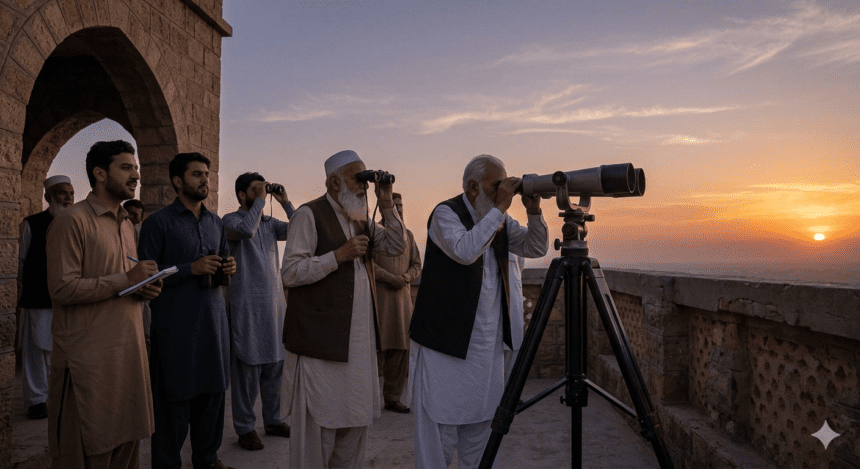
The Central Ruet-e-Hilal Committee meets in Islamabad tomorrow to determine the start of Zil Hajj, the final month of the Islamic calendar. The sighting of the crescent moon will dictate the date for Eid-ul-Adha across Pakistan.
Maulana Abdul Khabir Azad will chair the session at the Ministry of Religious Affairs. Simultaneously, zonal committees will gather in provincial capitals to collect testimony and data from across the country.
The stakes for tomorrow’s announcement reach beyond the calendar. If the moon is sighted, the first of Zil Hajj will fall on Saturday, setting Eid-ul-Adha for June 17. If the crescent remains elusive, the festival will shift to June 18. This uncertainty impacts logistics for millions, from livestock markets to travel plans for those returning to their hometowns.
The Pakistan Meteorological Department (PMD) has already weighed in. Their experts suggest the moon is unlikely to be visible tonight, pointing to a slim chance of sighting tomorrow evening. However, the final word rests with the committee, which relies on both scientific data and corroborated witness accounts.
In recent years, the committee has faced mounting pressure to synchronize moon sighting announcements across the country to avoid fragmented celebrations. Maulana Azad has consistently pushed for a unified national stance, often coordinating with regional zones to ensure the declaration is backed by broad consensus.
As tomorrow’s meeting approaches, the focus remains on the reports coming in from coastal areas and the southern provinces, where atmospheric conditions often play a decisive role in early sightings.