SARGODHA: The Special Anti-Terrorism Court (ATC) in Sargodha has issued arrest warrants for 57 individuals, including prominent opposition figures in the National and Punjab Assemblies—Omar Ayub Khan and Malik Ahmed Khan Bhachar—in connection with the May 9 attack on the Mianwali Judicial Complex. The case, which has been under investigation for over a year, now nears its final stage, with all evidence compiled and final arguments scheduled for hearing today (Tuesday).
Presiding ATC Judge Muhammad Naeem Sheikh has directed law enforcement agencies to ensure the arrest and production of all absconding accused without fail. The FIR No. 72/23, registered by Musakhel police, names 32 Pakistan Tehreek-e-Insaf (PTI) leaders and workers, some of whom were already handed a 10-year jail sentence in absentia. The list of accused includes Punjab Assembly Opposition Leader Malik Ahmed Khan Bhachar, along with Ahmed Chatta and Bilal Ijaz.
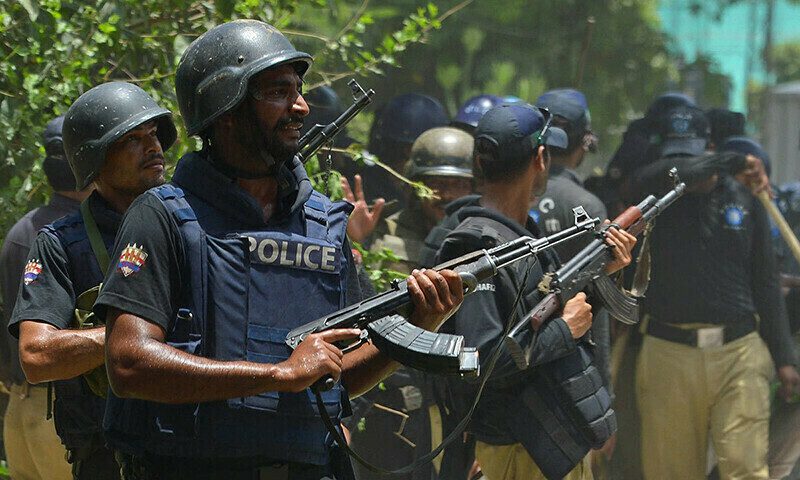
Meanwhile, Sargodha police have intensified a city-wide crackdown on narcotics and illegal weapons, resulting in the arrest of more than a dozen suspects, including three women. In operations conducted across multiple precincts, law enforcement recovered four kilograms of hashish, over one kilogram of crystal meth (ice), 60 liters of homemade alcohol, and five illicit firearms.
According to official sources, Satellite Town police seized significant quantities of narcotics from several individuals, including 1.2 kg of hashish from two female peddlers and 1.04 kg of ice from a man named Noman. Other recoveries included firearms such as a Kalashnikov, a 44 bore rifle, and multiple pistols, confiscated from various suspects across the region.
These coordinated actions reflect the growing pressure on law enforcement to act decisively against both political violence and criminal activity. Civil society activists, meanwhile, continue to question the persistence of parallel justice systems such as jirgas, calling for stronger state intervention.
As the legal process moves forward in high-profile political cases, authorities also appear focused on reinforcing public order through intensified crackdowns on drugs and weapons in the region.