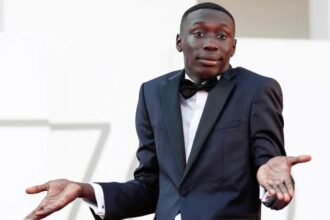

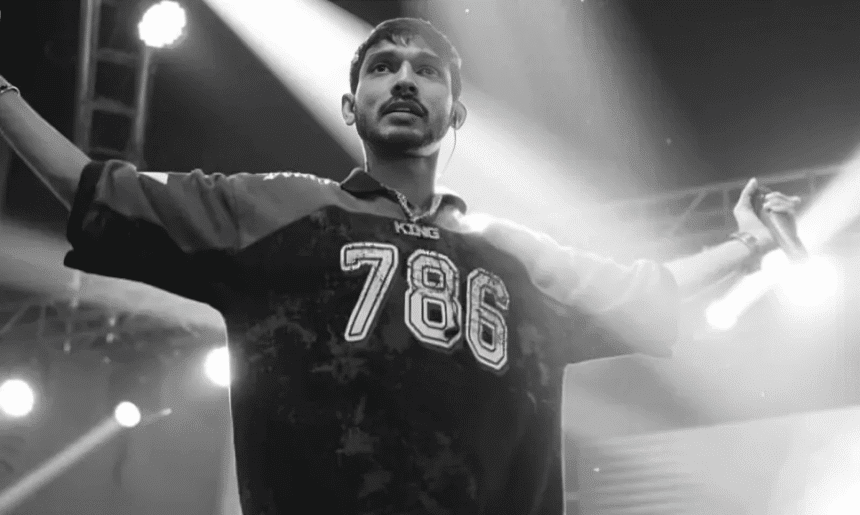
Pakistani rapper Talha Anjum triggered widespread social media debate after he caught, waved, and later draped himself in the Indian flag during a live performance in Nepal. The incident occurred while he was performing his track “Kaun Talha” when an audience member threw the tricolour toward the stage. Instead of ignoring it, Anjum grabbed the flag mid-air and wrapped it around his shoulders, immediately setting off a wave of online reactions.
Clips of the moment circulated within minutes, drawing both criticism and praise. Many accused the rapper of being insensitive given the tense political climate between Pakistan and India, while others applauded the act as a gesture of artistic unity.
Responding to the controversy, Anjum released a firm statement, declaring he would repeat his actions without hesitation. “My heart has no place for hate. My art has no borders. If me raising an Indian flag sparks controversy, so be it. I’ll do it again… I will never care about the media, the war-mongering governments and their propagandas,” he wrote.
The moment gained added significance as Pakistan–India cultural exchange has been particularly strained this year. Following the May conflict, Indian platforms removed Pakistani music, Pakistani creators reported their accounts being blocked, and Indian audiences relied on VPNs to access cross-border content. Even cricket — often a softer bridge between the two nations — witnessed increased hostility.
Against this backdrop, Anjum’s gesture carried symbolic weight. Critics labeled it reckless, while supporters viewed it as defiance against political division. Many argued that the act underscored how culture in South Asia often transcends borders despite state-imposed restrictions.
As reactions continue to pour in, the incident has reopened a debate many believed had fallen silent: whether artists should challenge political boundaries or remain cautious in hyper-sensitive times.