

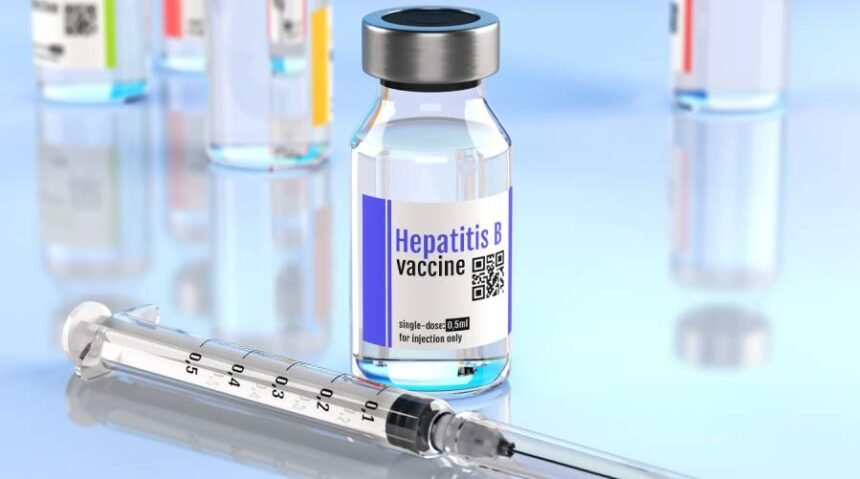
WASHINGTON: The U.S. Advisory Committee on Immunization Practices (ACIP) voted on Dec. 5 to end the decades-long recommendation that all newborns receive a hepatitis B vaccine at birth, instead advising shared clinical decision-making for infants born to mothers who test negative for hepatitis B surface antigen (HBsAg).
ACIP’s vote replaces a universal birth-dose policy in place since 1991 with a recommendation that parents and clinicians discuss risks and benefits for babies born to HBsAg-negative mothers. For infants who do not receive a birth dose, ACIP suggested the first vaccine dose be given no earlier than two months of age. The panel approved the change by a vote of 8 to 3. CDC
The universal birth-dose strategy helped drive down hepatitis B infections among U.S. children by more than 99% since it was introduced, and experts say removing the routine newborn dose risks reversing that progress. Decades of data show that vaccinating at birth prevents chronic infections that carry a high lifetime risk of cirrhosis and liver cancer. Several public health organizations and infectious-disease specialists have warned that the policy change could lead to avoidable pediatric infections. Illinois Department of Public Health+1
Four fact-checked concerns raised during the ACIP discussion
- Many infections go undetected, making risk assessment fragile
Hepatitis B can be asymptomatic for years, and an estimated large portion of infected adults are unaware of their status. Because the virus transmits through bodily fluids and can persist in the environment, pinpointing a newborn’s true exposure risk based only on maternal HBsAg results and household screening is imperfect. This uncertainty was a central argument for maintaining universal protection at birth.
- Newborns are uniquely vulnerable to chronic infection
Infants infected with hepatitis B have roughly a 90% chance of developing chronic infection, and a substantial share of those children face life-long liver disease and a markedly increased risk of liver cancer. Birth-dose vaccination directly protects newborns from this high rate of chronicity — a primary objective of the original universal policy. Reuters
- The historical drop in cases reflects vaccine success, not lack of need
Before universal birth-dose vaccination, hepatitis B infected hundreds of thousands of people annually, including many children. Following adoption of the birth dose and broader pediatric vaccination, cases fell dramatically; public health experts argue the decline is evidence the strategy worked and should not be scaled back. ACIP dissenters warned that the current low incidence is largely the result of past vaccination efforts.
- Policy change could increase disparities, reduce access
Critics warn that shared clinical decision-making may produce uneven uptake — particularly affecting families with limited access to primary care or those served by programs that relied on the simple, universal hospital-birth workflow. Some public health officials also flagged potential complications for vaccine programs such as Vaccines for Children and for insurance coverage norms.
Who made the decision, why it matters for trust in advisory bodies
The vote came after ACIP was reconstituted earlier in 2025 by Trump administration, which has openly voiced its anti-vaccine bias since coming into power. The panel’s new composition and the policy reversal have drawn intense scrutiny from medical societies and public health experts, who say the change departs from the precautionary principle that underpinned the universal birth-dose policy. The CDC director will now decide whether to adopt the ACIP recommendation into formal CDC policy.
What parents and clinicians should know now
- Parents of newborns should discuss hepatitis B risks and vaccination timing with their child’s clinician, especially if the mother’s HBsAg status is unknown or if household contacts may be at risk.
- Clinicians should continue to follow state and institutional protocols until federal policy is finalized and communicated by CDC leadership.
Public-health authorities emphasize the continued importance of screening pregnant people for HBsAg and maintaining robust surveillance and vaccination programs.
Bottom line: a policy change with real stakes
ACIP’s vote represents a substantive departure from a prevention strategy that dramatically reduced pediatric hepatitis B. Given the high risk of chronic infection in infants and the asymptomatic nature of many adult carriers, many experts urge caution, continued vigilance and reliance on evidence-based guidance as CDC decides whether to adopt the change. Ongoing monitoring and transparent communication will be critical to prevent harm and maintain public trust.