

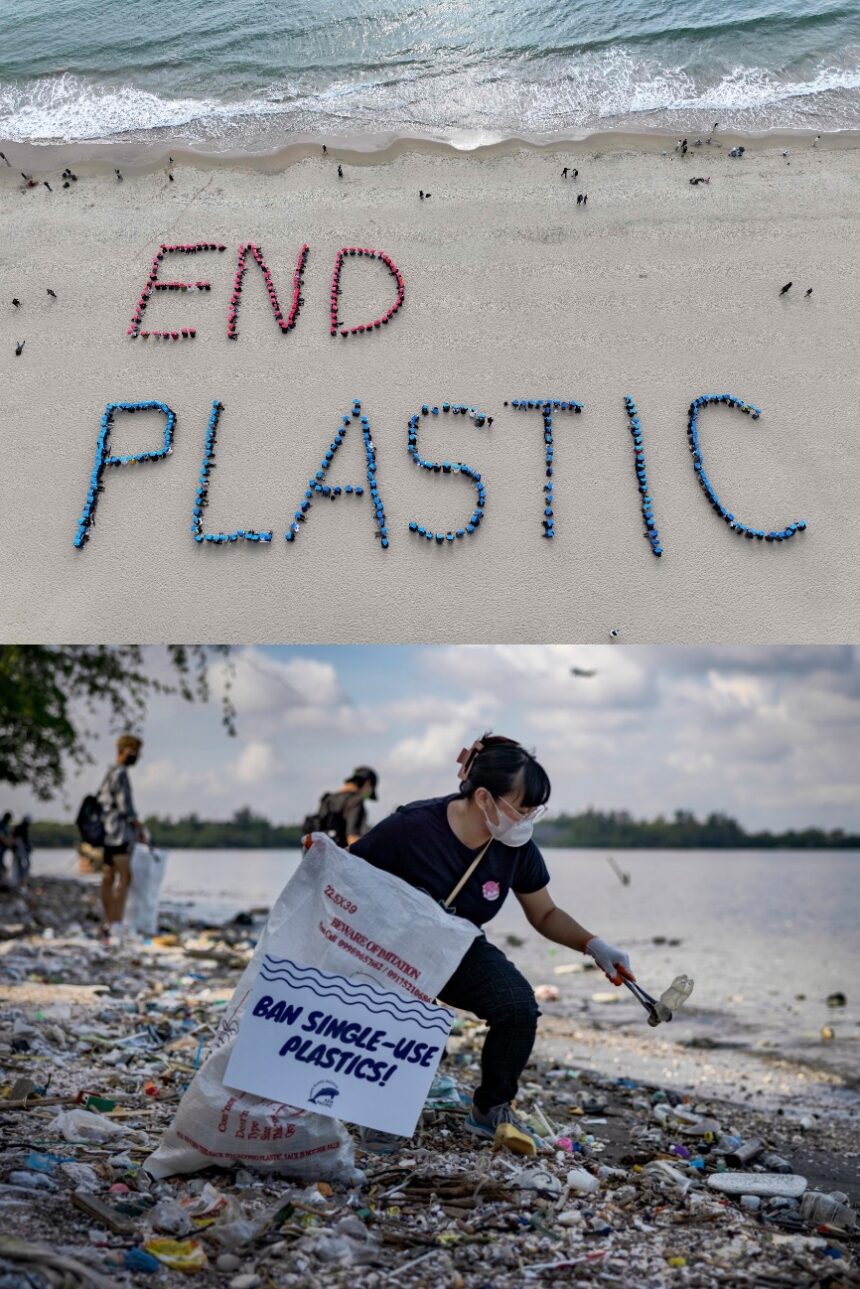
Despite rising global pressure to cut plastic pollution, the US resists limiting production, leaving major UN negotiations stuck ahead of key Geneva summit.
NAIROBI: The United States has officially announced it will not support any limits on plastic production in a proposed global treaty, deepening divisions between countries ahead of critical talks in Geneva next month.
The announcement came during an informal three day meeting in Nairobi, where negotiators from around the world gathered to prepare for the final round of UN talks aimed at tackling the growing crisis of plastic pollution.
In a statement obtained by Climate Home, US officials said they do not agree with setting rules on how much plastic can be produced or which raw materials are used to make it. They argued that such decisions should be left up to individual countries, especially where there is no international agreement.
“We support efforts to reduce plastic pollution, but not to stop plastic use altogether,” the US stated echoing the views of major fossil fuel producing nations like Saudi Arabia and Russia.
US Position Sparks Concern After Previous Flip-Flops
This firm stance marks a significant shift. Under the Biden administration, the US had previously supported stronger measures to limit plastic production. But following the return of President Trump, the country has stepped back from that position. During past negotiations in Busan, South Korea, the US remained largely silent, disappointing nations pushing for bold action.
As the second largest producer of plastic materials after China, the US now argues that cutting production could harm economic growth and job opportunities. Instead, it promotes “cost-effective and realistic solutions” such as better recycling and waste management.
A Divided World: Cut Plastic or Just Manage It Better?
The Nairobi meeting was seen as a key moment to find common ground. But despite some positive discussions, the talks ended without major progress.
Almost 100 countries including both rich and developing nations are calling for a strong and legally binding treaty that would reduce plastic production and use to environmentally safe levels.
However, oil-rich nations like India, Iran, Russia, and Saudi Arabia argue that the treaty should only focus on recycling and reducing waste, not on cutting how much plastic is made in the first place.
Experts Warn of Stalemate Ahead of Geneva Talks
Environmental experts are worried. David Azoulay, Director of Environmental Health at the Center for International Environmental Law (CIEL), said the meeting in Nairobi did not deliver the progress needed.
“Some countries continue to block real solutions,” he said. “While many developing countries are demanding a strong treaty, developed nations stayed quiet.”
Members of the High Ambition Coalition, a group of countries pushing for a tough treaty, said they are working on compromise proposals. One idea is to improve transparency requiring countries to report how much plastic they produce and what steps they are taking without yet enforcing hard limits.
Japan, for instance, suggested that countries should work together to support sustainable plastic production and consumption and regularly share data about their efforts.
What Will the US Do in Geneva?
With the Geneva negotiations just weeks away, all eyes are on the US. While its presence in Nairobi signals some interest in the treaty, its next steps remain unclear.
“They might stay out of the way or they could block progress altogether,” one negotiator told Climate Home.
The road to a strong global plastics treaty is still uncertain. What’s clear is that powerful economic and political interests are shaping the future of this agreement one that could play a critical role in fighting global pollution and protecting the planet for generations to come.