
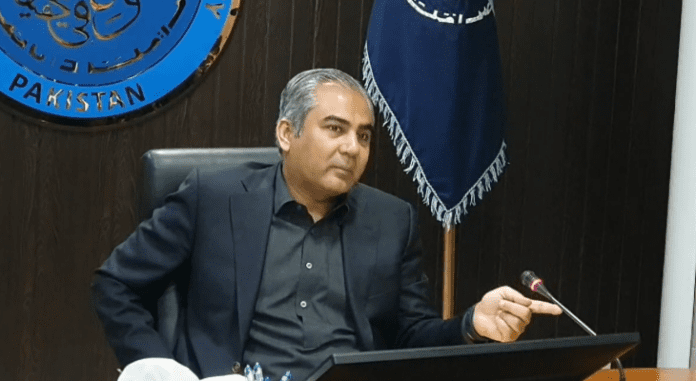
Karachi: Federal Interior Minister Mohsin Naqvi has acknowledged the growing difficulties faced by Pakistani citizens in obtaining visas for the United Arab Emirates, Kuwait, and Oman. Speaking at the Karachi Chamber of Commerce, he assured the business community that the government is actively working to resolve these issues and positive developments are expected soon.
Naqvi highlighted that the first ten days of Muharram passed peacefully across the country, crediting effective coordination among provinces. He noted that mobile service suspensions were kept to a minimum, which provided considerable relief to the public.
The interior minister expressed confidence that Pakistan’s passport will see a significant jump in global rankings within the next two years—a milestone the nation can be proud of. He added that efforts are also underway to fulfill the Prime Minister’s promise of introducing a Blue Passport and to modernize the passport system to facilitate overseas Pakistanis.
Naqvi revealed that 64 high-tax-paying citizens were offered special passports, but only 18 availed the opportunity. He further mentioned ongoing discussions with NADRA to include criminal records in citizens’ ID cards. Moreover, the implementation of Safe City Projects has already led to a noticeable decline in crime rates, and the upcoming Karachi Safe City Project is expected to bolster these gains.
Addressing coastal security concerns, he said Pakistan has a 1,200-kilometer-long coastline but initially had only six Coast Guard boats, with two more recently added. The government is committed to strengthening coastal defenses.
Naqvi emphasized that while smuggling hasn’t been completely eradicated, significant progress has been made, which has positively impacted the national economy. He also stated that the government is determined to end the black market for U.S. dollars and introduce reforms in taxation and enforcement systems.
He clarified that the police’s role is limited to making arrests, while the judiciary decides punishments. However, broader police reforms are necessary. He concluded by stating that the state must assert authority where needed, ensuring that no one acts above the law, and reaffirmed the government’s commitment to improving infrastructure, security, and public services across major cities, particularly Karachi.