
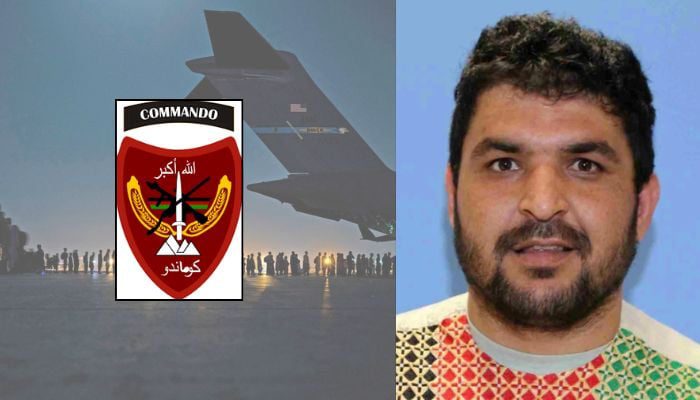
A viral image circulating on social media this week allegedly showing an identification badge belonging to the suspect accused of fatally shooting two National Guard members in Washington, D.C. has renewed scrutiny of Afghanistan’s covert “Zero Units,” elite paramilitary teams trained and supported by the CIA during the U.S. war in Afghanistan.
Viral Badge Claims Link to Kandahar Strike Force
The badge, whose authenticity has not been independently verified, purports to identify the suspect as a former member of the Kandahar Strike Force, also known as the 03 Unit.
The laminated card includes references to Firebase Gecko, the former CIA and U.S. special operations command hub located inside the former compound of Taliban founder Mullah Mohammad Omar.
The imagery has fueled online speculation about the suspect’s wartime background, though law enforcement has yet to confirm the badge as genuine.
CIA Director Confirms Prior Work With Agency
CIA Director John Ratcliffe acknowledged that the suspect had, in the past, worked with U.S. government agencies including the CIA as part of a partner force in southern Afghanistan.
This aligns with the structure of the Zero Units, which were composed entirely of Afghan nationals and operated under the National Directorate of Security (NDS), Afghanistan’s former intelligence service established with CIA backing.
Who Were the Zero Units?
Zero Units including the 01, 02, and 03 Units were among the most secretive and heavily trained Afghan forces of the war.
They carried out high-risk counterterrorism operations, often embedded with U.S. Special Forces or working directly under CIA direction.
A former senior Afghan general told CBS News that the 03 Unit, or Kandahar Strike Force, fell under the NDS Special Forces Directorate and was regarded as “one of the most active and professional units, trained and equipped by the CIA,” conducting missions under U.S. command.
Operational Effectiveness and Controversy
While widely valued by American officials for their reliability and precision, the Zero Units remained deeply controversial within Afghanistan:
Their operations were classified and largely independent of Afghan government oversight.
They were frequently involved in aggressive night raids, detentions, and targeted killings.
Human rights groups documented allegations of extrajudicial executions and civilian casualties, accusing the units of acting with near-total impunity.
Despite this, U.S. forces saw them as central to the fight against insurgent networks, particularly in Taliban-controlled regions. Following the Taliban’s takeover in August 2021, members of the Zero Units were expected to receive priority evacuation due to heightened risk of Taliban reprisals. Many played direct roles in securing the Kabul airport during the evacuation and were promised relocation for themselves and their families once operations ended. The Taliban government has not issued a formal comment regarding the newly surfaced claims or the suspect’s alleged ties to the Kandahar Strike Force.Uncertain Future After U.S. Withdrawal