

By: Wajeeha Batool
In the aftermath of Israel’s military assault on Iran, red flags have been seen flying over sacred Shiite sites, including the revered Jamkaran Mosque in Qom. But for many outside the Shiite Muslim community, the symbolism behind these crimson banners remains a mystery. Their message, however, is clear: the blood spilled demands justice — and revenge is inevitable.
The Tradition of the Red Flags on the Shrines of Imam Hussain (A.S) and Hazrat Abbas (A.S):
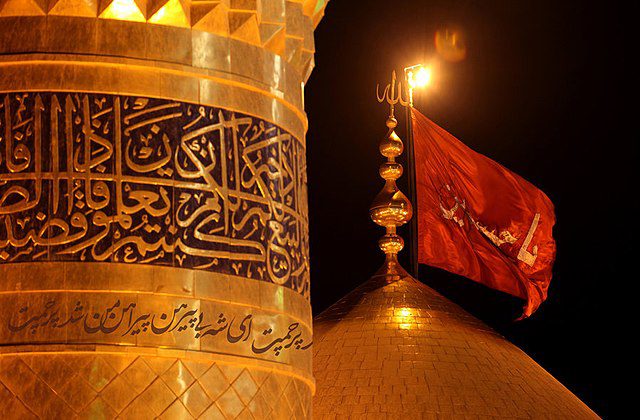
Every year, as the mourning months of Muharram and Safar come to an end, a striking ceremony takes place at the shrines of Imam Hussain (A.S) and his brother Abbas (A.S) in Karbala, Iraq. After the Maghrib and Isha prayers, the black flags—symbols of mourning—are taken down from the domes. In their place, bold red flags are hoisted.
This tradition, carried out on the eve of Rabi’ al-Awwal, is deeply rooted in Arab culture. Historically, when someone was unjustly killed and their blood avenged, a red flag would be placed on their grave to signify that revenge was pending. Until justice was served, the red would remain — a constant reminder of unfinished business.
Today, the red flags atop the shrines of Imam Hussain (A.S) and Abbas (A.S) still carry that same message. Their martyrdom in the historic Battle of Karbala remains unavenged, and their followers vow that the blood spilled was not in vain.
During Muharram and Safar, black flags symbolize grief and remembrance for their tragic deaths. But as those months end, the red banners declare unwavering resistance and the call for justice.
The Red Flag over Jamkaran Mosque: Iran’s Response to Israeli Strikes
When Israeli fighter jets launched deadly attacks on Iran’s military and nuclear sites earlier this week, the reaction was swift and symbolic. Following the strikes, which reportedly killed senior Iranian commanders, scientists, civilians, women, and children, a red flag was raised over the Jamkaran Mosque in Qom, a city regarded as one of Iran’s holiest.
The mosque is closely associated with Imam Mahdi (A.S), the awaited savior in Shiite belief. By hoisting the red flag there, Iran sent a clear, defiant message to the world: revenge is coming.
Iranian state media, including Press TV, broadcast the ceremony live as crowds gathered outside the mosque, chanting slogans against Israel and demanding retaliation. Many waved Iranian flags while others carried banners vowing vengeance.
In a televised address, Iran’s Supreme Leader Ayatollah Ali Khamenei condemned the Israeli strikes, declaring:
“The Zionist regime has committed a grave crime against our beloved nation, exposing its true evil and satanic nature. By doing so, they have signed their own bitter and painful fate — and they will not escape it.”
The spokesperson for Iran’s armed forces, Brigadier General Abolfazl Shekarchi, echoed those sentiments, warning:
“Israel will pay dearly for this aggression. Our military response will be swift and decisive.”
Until that response comes, the red flag over Jamkaran — and over Shiite mosques and gatherings worldwide — will continue to fly, serving as both a mourning symbol and a battle cry.
For Shia Muslims, especially in Iran and across the global community, the red flag is not just fabric. It’s a sacred reminder: injustice cannot go unanswered, and the struggle for dignity and retribution never dies.












🥰♥️