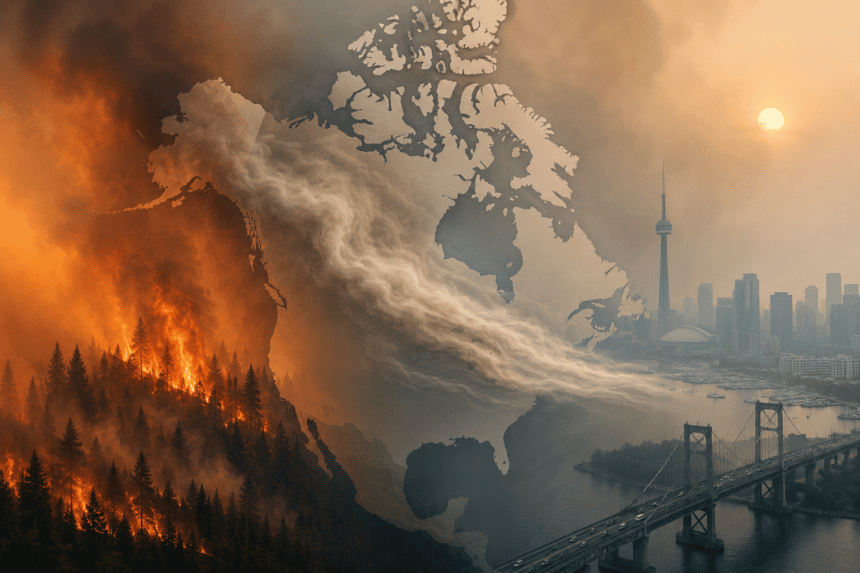
Millions across the northern United States and Canada are bracing for a hazy weekend as wildfire smoke from the boreal forests drifts south. Meteorological models indicate a shift in wind patterns, pushing a thick plume of particulate matter across the border, triggering air quality warnings in cities from the Great Lakes to the Atlantic coast.
The culprit is a series of lingering, intense fires in northern provinces. While these fires have been burning for weeks, the current atmospheric pressure system is acting like a funnel, driving the smoke directly into densely populated corridors.
For residents in Chicago, Detroit, and parts of upstate New York, the sky will likely take on a dull, milky appearance by Saturday morning. Health officials aren’t just worried about the visibility; they’re worried about the lungs. Fine particulate matter—known as PM2.5—is small enough to enter the bloodstream, and local health departments are urging those with asthma or respiratory conditions to stay indoors.
“It’s not just an inconvenience; it’s a public health event,” said Dr. Elena Vance, a regional air quality specialist. “When the AQI climbs above 150, we start seeing a spike in emergency room visits. We’re telling people to treat this like a heat wave—limit your time outside.”
The smoke isn’t expected to settle permanently. Meteorologists anticipate a cold front sweeping through late Sunday, which should help clear the haze by Monday morning. However, the transient nature of the smoke makes it difficult to predict exactly which neighborhoods will be hit hardest.
This cycle of smoke has become a recurring reality for North Americans. It’s a stark reminder of the shifting climate in the northern forests, where fire seasons are now starting earlier and ending later.
If you’re planning outdoor activities this weekend, check your local air quality index before heading out. If the sky looks grey or smells like a campfire, the best course of action is simple: keep the windows shut and the air filters running.