

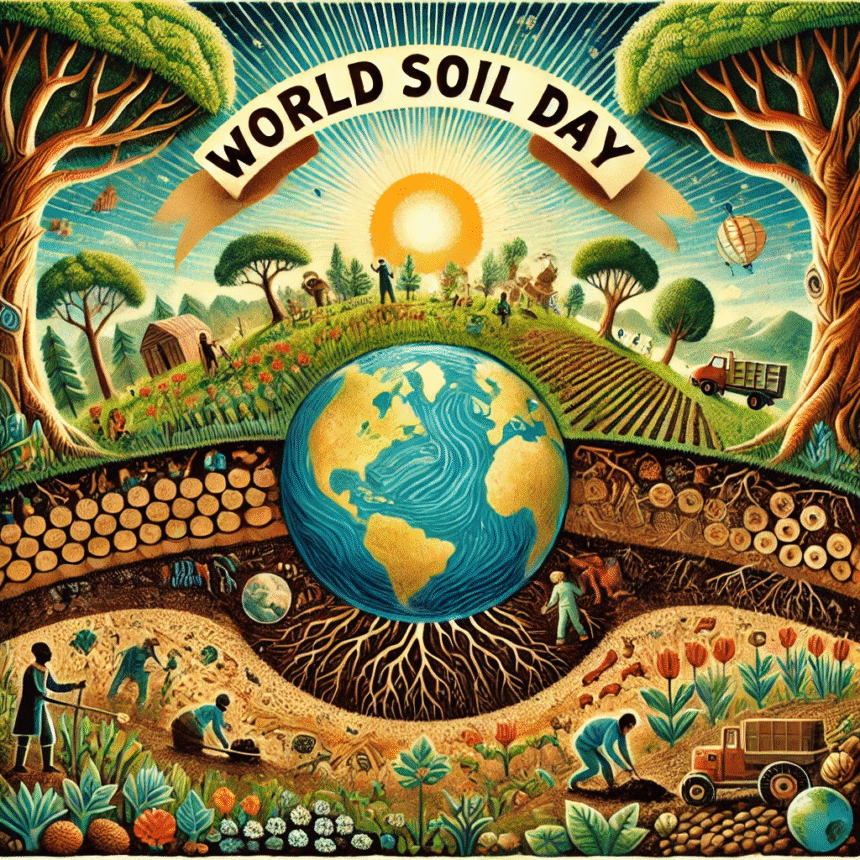
Nepal Gears Up to Mark World Soil Day with Nationwide Awareness Campaigns
Kathmandu | December 4, 2025:
Nepal is set to observe World Soil Day on December 5 with large-scale awareness campaigns and soil testing programmes being organised at the central, provincial, and local levels, aiming to educate farmers and the public on the urgent need for sustainable soil management.
The Ministry of Agriculture and Livestock Development, through the Department of Agriculture, announced that this year’s activities will focus on promoting clean production techniques, balanced fertiliser use, and long-term soil fertility to ensure food security and environmental protection. World Soil Day is globally observed every year to highlight the critical role of soil in sustaining life and agriculture.
Recognised officially by the United Nations General Assembly in 2013 following a proposal by the Food and Agriculture Organisation (FAO), the Day has been observed worldwide for over a decade. This year marks its 12th global celebration under the theme “Healthy Soils for Healthy Cities.” Nepal began officially observing the Day in 2014 with the introduction of mobile soil testing services in Panchkhal, Kavrepalanchowk.
Alarming Decline in Soil Health
Recent government data shows that Nepal loses nearly 1.7 millimetres of fertile topsoil annually due to erosion, posing a serious threat to agricultural productivity. According to the Digital Soil Map (DSM), more than 54 per cent of tested soil samples are acidic, 29 per cent neutral, and only 17 per cent alkaline. The eastern region of the country has been found to be more acidic compared to the western region.
Organic matter levels remain low across much of the country. Official figures show that 37 per cent of soils contain low organic matter, while 45 per cent fall in the medium category and only 18 per cent maintain high levels. The Tarai region has particularly poor organic content compared to the hills and mountains. The national average organic matter content currently stands at 2.59 per cent, down from 2.77 per cent last year.
In terms of essential nutrients, 28 per cent of soils show low nitrogen levels, 35 per cent are low in phosphorus, and 28 per cent lack sufficient potash. These deficiencies directly affect crop yields and food quality.
Causes Behind Soil Degradation
Experts attribute the deteriorating soil condition to several factors, including:
Overuse of chemical fertilisers
Minimal use of compost and organic manure
Rising pesticide dependency
Lack of crop rotation
Burning and removal of crop residues
Unscientific farming practices
Industrial pollution and urban expansion
Recurring floods and climate change impacts
These factors have not only reduced soil fertility but also raised concerns over long-term food security and ecosystem stability.
Government Response and Policy Measures
To tackle the growing crisis, the government continues to implement long-term strategies for soil conservation. The National Fertiliser Policy, 2058 is aimed at improving soil fertility and agricultural output, while the Digital Soil Map Campaign, launched in February 2021, is helping farmers understand soil conditions through scientific testing and data-driven recommendations.
The Department of Agriculture has urged farmers nationwide to conduct regular soil testing, adopt modern farming techniques, practise crop rotation, and increase the use of organic fertilisers to restore declining soil health.
As Nepal marks World Soil Day this year, authorities hope that increased awareness and farmer participation will play a crucial role in protecting the country’s most valuable agricultural resource for future generations.